A Philosophical Enquiry Into The Origin Of Our Ideas Of The Sublime and The Beautiful — Edmund Burke
A Philosophical Enquiry Into The Origin Of Our Ideas Of The Sublime and The Beautiful
Edmund BurkeOxford University Press - Classics
A Philosophical Enquiry Into The Origin Of Our Ideas Of The Sublime and The Beautiful
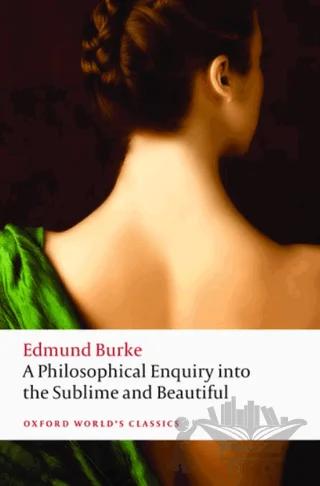
Edmund BurkeIn 1757 the 27 year old Edmund Burke argued that our aesthetic responses are experienced as pure emotional arousal unencumbered by intellectual considerations In so doing he overturned the Platonic tradition in aesthetics that had prevailed from antiquity until the eighteenth century and replaced metaphysics with psychology and even physiology as the basis for the subject Burke s theory of beauty encompasses the female form nature art and poetry and he analyses our delight in sublime effects that thrill and excite us His revolution in method continues to have repercussions in the aesthetic theories of today and his revolution in sensibility has paved the way for literary and artistic movements from the Gothic novel through Romanticism twentieth century painting and beyond In this new edition Paul Guyer conducts the reader through Burke s Enquiry focusing on its place in the history of aesthetics and highlighting its innovations as well as its influence on many subsequent authors from Kant and Schiller to Ruskin and Nietzsche
Oxford University Press - Classics
In 1757 the 27 year old Edmund Burke argued that our aesthetic responses are experienced as pure emotional arousal unencumbered by intellectual considerations In so doing he overturned the Platonic tradition in aesthetics that had prevailed from antiquity until the eighteenth century and replaced metaphysics with psychology and even physiology as the basis for the subject Burkes theory of beauty encompasses the female form nature art and poetry and he analyses our delight in sublime effects that thrill and excite us His revolution in method continues to have repercussions in the aesthetic theories of today and his revolution in sensibility has paved the way for literary and artistic movements from the Gothic novel through Romanticism twentieth century painting and beyond In this new edition Paul Guyer conducts the reader through Burkes Enquiry focusing on its place in the history of aesthetics and highlighting its innovations as well as its influence on many subsequent authors from Kant and Schiller to Ruskin and Nietzsche
Oxford University Press - Classics
In 1757 the 27 year old Edmund Burke argued that our aesthetic responses are experienced as pure emotional arousal unencumbered by intellectual considerations In so doing he overturned the Platonic tradition in aesthetics that had prevailed from antiquity until the eighteenth century and replaced metaphysics with psychology and even physiology as the basis for the subject Burke s theory of beauty encompasses the female form nature art and poetry and he analyses our delight in sublime effects that thrill and excite us His revolution in method continues to have repercussions in the aesthetic theories of today and his revolution in sensibility has paved the way for literary and artistic movements from the Gothic novel through Romanticism twentieth century painting and beyond In this new edition Paul Guyer conducts the reader through Burke s Enquiry focusing on its place in the history of aesthetics and highlighting its innovations as well as its influence on many subsequent authors from Kant and Schiller to Ruskin and Nietzsche