Amorium a Byzantine City in Anatolia — Christopher Lightfoot
Amorium a Byzantine City in Anatolia
Christopher LightfootHomer Kitabevi
Amorium a Byzantine City in Anatolia
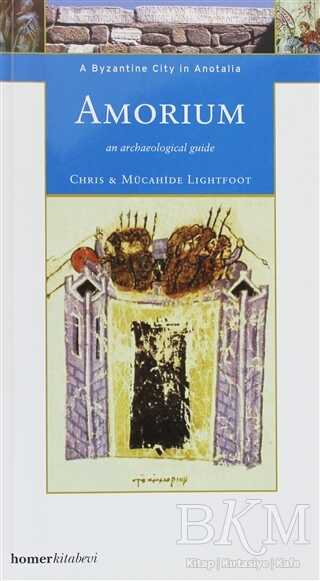
Christopher LightfootThese archaeological guides are written by well known archaeologists with the thought that they might evoke the spirit of these places for those who are interested in remains of Anatolian civilizations Illustrated with beautiful photographs equipped with helpful plans and drawings they are essential to travellers to Turkey In 1836 William Hamilton identified the site of Amorium and provided the first description of the ancient ruins We reached the deserted and dreary site of what was once a populous city Near the centre of the valley in which the ruins are situated is an insulated hill about half a mile in circumference on which may still be traced a portion of the walls of an Acropolis The principal part of the town is to the S and S W of the Acropolis These ruins appear cheefly to date from the early Byzantine or Christian period marking the existence of one of those large and important towns which were destroyed in this part of Asia Minor by the irruptions of the Saracens and the Seljukian monarcahs of lconium Much of what Hamilton described has now disappeared but since 1988 the Amorium Excavations Project has been able to reveal other ruins that testify to the accuracy of his assessment of Amorium as an important Roman and Byzantine city This guidebook aims to give an interim account of the on going excavations and set the site in its proper historical context
Homer Kitabevi
These archaeological guides are written by well known archaeologists with the thought that they might evoke the spirit of these places for those who are interested in remains of Anatolian civilizations Illustrated with beautiful photographs equipped with helpful plans and drawings they are essential to travellers to Turkey In 1836 William Hamilton identified the site of Amorium and provided the first description of the ancient ruins We reached the deserted and dreary site of what was once a populous city Near the centre of the valley in which the ruins are situated is an insulated hill about half a mile in circumference on which may still be traced a portion of the walls of an Acropolis The principal part of the town is to the S and S W of the Acropolis These ruins appear cheefly to date from the early Byzantine or Christian period marking the existence of one of those large and important towns which were destroyed in this part of Asia Minor by the irruptions of the Saracens and the Seljukian monarcahs of lconium Much of what Hamilton described has now disappeared but since 1988 the Amorium Excavations Project has been able to reveal other ruins that testify to the accuracy of his assessment of Amorium as an important Roman and Byzantine city This guidebook aims to give an interim account of the on going excavations and set the site in its proper historical context
Homer Kitabevi
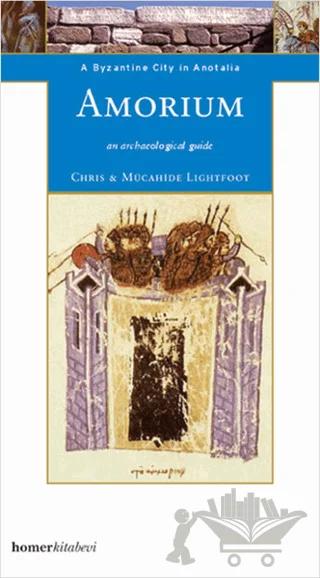
These archaeological guides are written by well known archaeologists with the thought that they might evoke the spirit of these places for those who are interested in remains of Anatolian civilizations Illustrated with beautiful photographs equipped with helpful plans and drawings they are essential to travellers to Turkey In 1836 William Hamilton identified the site of Amorium and provided the first description of the ancient ruins We reached the deserted and dreary site of what was once a populous city Near the centre of the valley in which the ruins are situated is an insulated hill about half a mile in circumference on which may still be traced a portion of the walls of an Acropolis The principal part of the town is to the S and S W of the Acropolis These ruins appear cheefly to date from the early Byzantine or Christian period marking the existence of one of those large and important towns which were destroyed in this part of Asia Minor by the irruptions of the Saracens and the Seljukian monarcahs of lconium Much of what Hamilton described has now disappeared but since 1988 the Amorium Excavations Project has been able to reveal other ruins that testify to the accuracy of his assessment of Amorium as an important Roman and Byzantine city This guidebook aims to give an interim account of the on going excavations and set the site in its proper historical context
Homer Kitabevi ve Yayıncılık
In 1836 William Hamilton identified the site of Amorium and provided the first description of the ancient ruins We reached the deserted and dreary site of what was once a populous city Near the centre of the valley in which the ruins are situated is an insulated hill about half a mile in circumference on which may still be traced a portion of the walls of an Acropolis The principal part of the town is to the S and S W of the Acropolis These ruins appear chiefly to date from the early Byzantine or Christian period marking the existence of one of those large and important towns which were destroyed in this part of Asia Minor by the irruptions of the Saracens and the Seljuki