An Overview of Traffic Accident Prediction Models — Mohammad Ali Sahraei Emre Kuşkapan Muhammed Yasin Çodur Ahmet Tortum
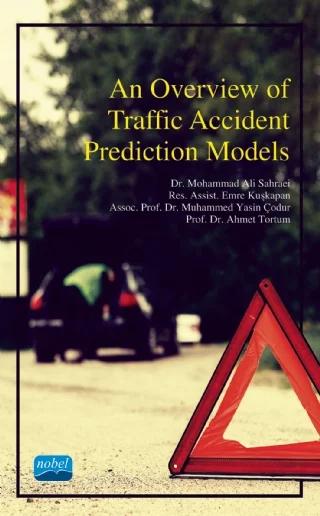
An Overview of Traffic Accident Prediction Models
Mohammad Ali Sahraei Emre Kuşkapan Muhammed Yasin Çodur Ahmet TortumNobel Akademik Yayıncılık
An Overview of Traffic Accident Prediction Models
Mohammad Ali Sahraei Emre Kuşkapan Muhammed Yasin Çodur Ahmet TortumThe major goal of this book is to review and determine the existing traffic accident prediction methods as well as aspects behind traffic crash that could be useful to decrease crash frequency and intensity injury and death in future therefore saving numerous lives and wealth The evaluation of the studies that was carried out in this research for a period of 21 years from 2000 which has led to several remarkable findings for traffic accident prediction models There are numerous investigation in the literature to predict traffic crash i e frequency severity and risk factors based on sixteen methods including regression Artificial Neural Network ANN random forest mathematics and probabilistic spatial Markov model decision tree time series hybrid methods classification Stochastic Gradient Boosted Decision Trees Genetic Algorithms GA fuzzy data mining gray system theory and Bayesian Network Further comparisons determined that regression and ANN models were the most powerful methods for traffic accident prediction i e accident frequency severity and risk factors followed by mathematics and probabilistic hybrid Bayesian network and spatial methods In contrast Markov GA Gray system GBDT and data mining were determined as models with minimum usage
Nobel Akademik Yayıncılık
The major goal of this book is to review and determine the existing traffic accident prediction methods as well as aspects behind traffic crash that could be useful to decrease crash frequency and intensity injury and death in future therefore saving numerous lives and wealth The evaluation of the studies that was carried out in this research for a period of 21 years from 2000 which has led to several remarkable findings for traffic accident prediction models There are numerous investigation in the literature to predict traffic crash i e frequency severity and risk factors based on sixteen methods including regression Artificial Neural Network ANN random forest mathematics and probabilistic spatial Markov model decision tree time series hybrid methods classification Stochastic Gradient Boosted Decision Trees Genetic Algorithms GA fuzzy data mining gray system theory and Bayesian Network Further comparisons determined that regression and ANN models were the most powerful methods for traffic accident prediction i e accident frequency severity and risk factors followed by mathematics and probabilistic hybrid Bayesian network and spatial methods In contrast Markov GA Gray system GBDT and data mining were determined as models with minimum usage
NOBEL AKADEMİK YAYINCILIK
The major goal of this book is to review and determine the existing traffic accident prediction methods as well as aspects behind traffic crash that could be useful to decrease crash frequency and intensity injury and death in future therefore saving numerous lives and wealth The evaluation of the studies that was carried out in this research for a period of 21 years from 2000 which has led to several remarkable findings for traffic accident prediction models There are numerous investigation in the literature to predict traffic crash i e frequency severity and risk factors based on sixteen methods including regression Artificial Neural Network ANN random forest mathematics and probabilistic spatial Markov model decision tree time series hybrid methods classification Stochastic Gradient Boosted Decision Trees Genetic Algorithms GA fuzzy data mining gray system theory and Bayesian Network Further comparisons determined that regression and ANN models were the most powerful methods for traffic accident prediction i e accident frequency severity and risk factors followed by mathematics and probabilistic hybrid Bayesian network and spatial methods In contrast Markov GA Gray system GBDT and data mining were determined as models with minimum usage
Nobel Akademik Yayıncılık
Emre Kuşkapan tarafından kaleme alınan An Overview of Traffic Accident Prediction Models Nobel Akademik Yayıncılık eseri olarak okurlarla buluşuyor An Overview of Traffic Accident Prediction Models Emre Kuşkapan Kitap Özeti The major goal of this book is to review and determine the existing traffic accident prediction methods as well as aspects behind traffic crash that could be useful to decrease crash frequency and intensity injury and death in future therefore saving numerous lives and wealth The evaluation of the studies that was carried out in this research for a period of 21 years from 2000 which has led to several remarkable findings for traffic accident prediction models There are numerous investigation in the literature to predict traffic crash i e frequency severity and risk factors based on sixteen methods including regression Artificial Neural Network ANN random forest mathematics and probabilistic spatial Markov model decision tree time series hybrid methods classification Stochastic Gradient Boosted Decision Trees Genetic Algorithms GA fuzzy data mining gray system theory and Bayesian Network Further comparisons determined that regression and ANN models were the most powerful methods for traffic accident prediction i e accident frequency severity and risk factors followed by mathematics and probabilistic hybrid Bayesian network and spatial methods In contrast Markov GA Gray system GBDT and data mining were determined as models with minimum usage Yayınevi Nobel Akademik Yayıncılık Yazar Emre Kuşkapan Sayfa 138 Sayfa Kağıt 2 Hamur Boyut 14 00x21 00 cm Basım Yılı Aralık 2020 Barkod 9786257677103 Kategori Yabancı Dilde Kitaplar
Nobel Akademik Yayıncılık
The major goal of this book is to review and determine the existing traffic accident prediction methods as well as aspects behind traffic crash that could be useful to decrease crash frequency and intensity injury and death in future therefore saving numerous lives and wealth The evaluation of the studies that was carried out in this research for a period of 21 years from 2000 which has led to several remarkable findings for traffic accident prediction models There are numerous investigation in the literature to predict traffic crash i e frequency severity and risk factors based on sixteen methods including regression Artificial Neural Network ANN random forest mathematics and probabilistic spatial Markov model decision tree time series hybrid methods classification Stochastic Gradient Boosted Decision Trees Genetic Algorithms GA fuzzy data mining gray system theory and Bayesian Network Further comparisons determined that regression and ANN models were the most powerful methods for traffic accident prediction i e accident frequency severity and risk factors followed by mathematics and probabilistic hybrid Bayesian network and spatial methods In contrast Markov GA Gray system GBDT and data mining were determined as models with minimum usage
Nobel Akademik Yayıncılık
The major goal of this book is to review and determine the existing traffic accident prediction methods as well as aspects behind traffic crash that could be useful to decrease crash frequency and intensity injury and death in future therefore saving numerous lives and wealth The evaluation of the studies that was carried out in this research for a period of 21 years from 2000 which has led to several remarkable findings for traffic accident prediction models There are numerous investigation in the literature to predict traffic crash i e frequency severity and risk factors based on sixteen methods including regression Artificial Neural Network ANN random forest mathematics and probabilistic spatial Markov model decision tree time series hybrid methods classification Stochastic Gradient Boosted Decision Trees Genetic Algorithms GA fuzzy data mining gray system theory and Bayesian Network Further comparisons determined that regression and ANN models were the most powerful methods for traffic accident prediction i e accident frequency severity and risk factors followed by mathematics and probabilistic hybrid Bayesian network and spatial methods In contrast Markov GA Gray system GBDT and data mining were determined as models with minimum usage