Artificial Intelligence and Language Teaching Innovations Challenges and Future Prospects in Language Education — Fatma Demiray Akbulut
Artificial Intelligence and Language Teaching Innovations Challenges and Future Prospects in Language Education
Fatma Demiray AkbulutNobel Bilimsel Eserler
Artificial Intelligence and Language Teaching Innovations Challenges and Future Prospects in Language Education
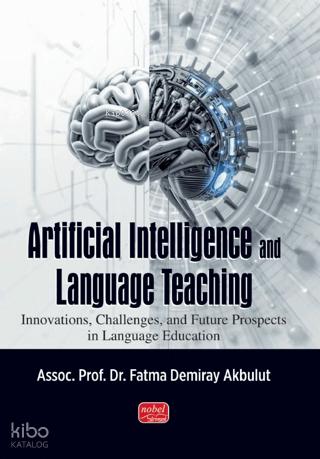
Fatma Demiray AkbulutArtificial Intelligence and Language Teaching Innovations Challenges and Future Prospects in Language Education offers a comprehensive and forward looking exploration of how AI is reshaping the theory and practice of language teaching Bridging traditional pedagogical foundations with cutting edge technological developments the book examines key AI driven tools personalised learning environments intelligent tutoring systems immersive technologies and generative AI applications that are transforming classroom dynamics It provides critical insights into the benefits limitations and pedagogical implications of AI while addressing essential ethical cultural and social considerations including data privacy digital inequality academic integrity and the evolving role of teachers Featuring extensive analyses practical examples and future oriented discussions this volume serves as a vital resource for language educators researchers teacher trainees and policymakers seeking to understand and navigate the rapidly evolving landscape of AI enhanced language education It ultimately argues for a balanced human centred approach in which AI strengthens rather than replaces the uniquely human dimensions of teaching and learning
Nobel Bilimsel Eserler
Artificial Intelligence and Language Teaching Innovations Challenges and Future Prospects in Language Education offers a comprehensive and forward looking exploration of how AI is reshaping the theory and practice of language teaching Bridging traditional pedagogical foundations with cutting edge technological developments the book examines key AI driven tools personalised learning environments intelligent tutoring systems immersive technologies and generative AI applications that are transforming classroom dynamics It provides critical insights into the benefits limitations and pedagogical implications of AI while addressing essential ethical cultural and social considerations including data privacy digital inequality academic integrity and the evolving role of teachers Featuring extensive analyses practical examples and future oriented discussions this volume serves as a vital resource for language educators researchers teacher trainees and policymakers seeking to understand and navigate the rapidly evolving landscape of AI enhanced language education It ultimately argues for a balanced human centred approach in which AI strengthens rather than replaces the uniquely human dimensions of teaching and learning
Nobel Bilimsel Eserler
Artificial Intelligence and Language Teaching Innovations Challenges and Future Prospects in Language Education offers a comprehensive and forward looking exploration of how AI is reshaping the theory and practice of language teaching Bridging traditional pedagogical foundations with cutting edge technological developments the book examines key AI driven tools personalised learning environments intelligent tutoring systems immersive technologies and generative AI applications that are transforming classroom dynamics It provides critical insights into the benefits limitations and pedagogical implications of AI while addressing essential ethical cultural and social considerations including data privacy digital inequality academic integrity and the evolving role of teachers Featuring extensive analyses practical examples and future oriented discussions this volume serves as a vital resource for language educators researchers teacher trainees and policymakers seeking to understand and navigate the rapidly evolving landscape of AI enhanced language education It ultimately argues for a balanced human centred approach in which AI strengthens rather than replaces the uniquely human dimensions of teaching and learning