Artificial Intelligence and Law Emerging Challenges and Embracing Opportunities — Kutlay Telli
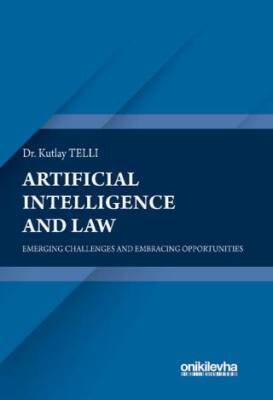
Artificial Intelligence and Law Emerging Challenges and Embracing Opportunities
Kutlay TelliOn İki Levha Yayınları
Artificial Intelligence and Law Emerging Challenges and Embracing Opportunities
Kutlay TelliArtificial intelligence has rapidly evolved from a speculative concept of the twentieth century into a transformative force shaping every sector of contemporary society including law governance and the administration of justice While AI based technological progress has delivered unprecedented efficiency autonomy and data driven decision making capacity it has simultaneously exposed profound regulatory ethical and accountability gaps within existing legal systems In this context the present book is not merely a descriptive account of artificial intelligence but a solution oriented legal inquiry into the governance of AI systems Indeed the available work begins by highlighting AI within its historical evolutionfrom early conceptual reflections to the rise of machine learning autonomous systems and algorithm driven decision makingand progressively builds toward a normative legal framework designed to address the regulatory vacuum surrounding contemporary AI technologies Rather than limiting itself to theoretical concerns the present research systematically identifies the structural weaknesses of current legal regimes highlights the risks posed to fundamental rights such as fairness transparency and accountability as well as data protection and advances concrete law centric recommendations Through a carefully defined scope a deliberate methodological design and a precise clarification of terminology the study articulates a comprehensive model for responsible AI governance Ultimately the available book positions itself as an analytical and forward looking legal guide aimed at policymakers regulators legal practitioners and scholars seeking to reconcile technological innovation with the rule of law in an increasingly automated global landscape
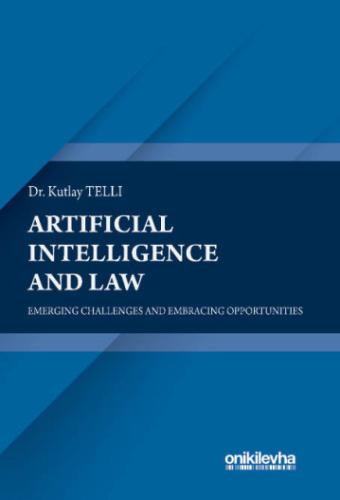
On İki Levha Yayınları
Artificial intelligence has rapidly evolved from a speculative concept of the twentieth century into a transformative force shaping every sector of contemporary society including law governance and the administration of justice While AI based technological progress has delivered unprecedented efficiency autonomy and data driven decision making capacity it has simultaneously exposed profound regulatory ethical and accountability gaps within existing legal systems In this context the present book is not merely a descriptive account of artificial intelligence but a solution oriented legal inquiry into the governance of AI systems Indeed the available work begins by highlighting AI within its historical evolutionfrom early conceptual reflections to the rise of machine learning autonomous systems and algorithm driven decision makingand progressively builds toward a normative legal framework designed to address the regulatory vacuum surrounding contemporary AI technologies Rather than limiting itself to theoretical concerns the present research systematically identifies the structural weaknesses of current legal regimes highlights the risks posed to fundamental rights such as fairness transparency and accountability as well as data protection and advances concrete law centric recommendations Through a carefully defined scope a deliberate methodological design and a precise clarification of terminology the study articulates a comprehensive model for responsible AI governance Ultimately the available book positions itself as an analytical and forward looking legal guide aimed at policymakers regulators legal practitioners and scholars seeking to reconcile technological innovation with the rule of law in an increasingly automated global landscape ARKA KAPAKTAN
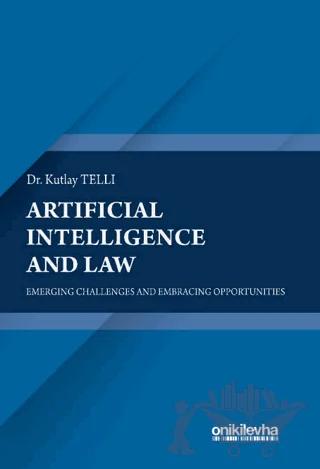
On İki Levha Yayınları
Artificial intelligence has rapidly evolved from a speculative concept of the twentieth century into a transformative force shaping every sector of contemporary society including law governance and the administration of justice While AI based technological progress has delivered unprecedented efficiency autonomy and data driven decision making capacity it has simultaneously exposed profound regulatory ethical and accountability gaps within existing legal systems In this context the present book is not merely a descriptive account of artificial intelligence but a solution oriented legal inquiry into the governance of AI systems Indeed the available work begins by highlighting AI within its historical evolutionfrom early conceptual reflections to the rise of machine learning autonomous systems and algorithm driven decision makingand progressively builds toward a normative legal framework designed to address the regulatory vacuum surrounding contemporary AI technologies Rather than limiting itself to theoretical concerns the present research systematically identifies the structural weaknesses of current legal regimes highlights the risks posed to fundamental rights such as fairness transparency and accountability as well as data protection and advances concrete law centric recommendations Through a carefully defined scope a deliberate methodological design and a precise clarification of terminology the study articulates a comprehensive model for responsible AI governance Ultimately the available book positions itself as an analytical and forward looking legal guide aimed at policymakers regulators legal practitioners and scholars seeking to reconcile technological innovation with the rule of law in an increasingly automated global landscape
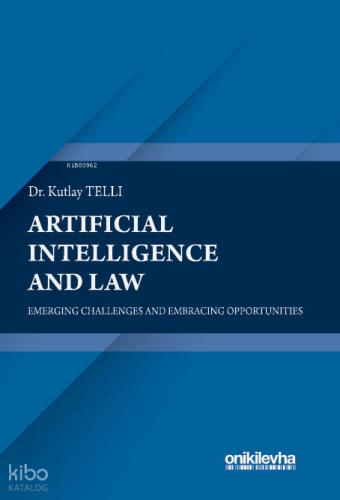
On İki Levha Yayıncılık
Artificial intelligence has rapidly evolved from a speculative concept of the twentieth century into a transformative force shaping every sector of contemporary society including law governance and the administration of justice While AI based technological progress has delivered unprecedented efficiency autonomy and data driven decision making capacity it has simultaneously exposed profound regulatory ethical and accountability gaps within existing legal systems In this context the present book is not merely a descriptive account of artificial intelligence but a solution oriented legal inquiry into the governance of AI systems Indeed the available work begins by highlighting AI within its historical evolutionfrom early conceptual reflections to the rise of machine learning autonomous systems and algorithm driven decision makingand progressively builds toward a normative legal framework designed to address the regulatory vacuum surrounding contemporary AI technologies Rather than limiting itself to theoretical concerns the present research systematically identifies the structural weaknesses of current legal regimes highlights the risks posed to fundamental rights such as fairness transparency and accountability as well as data protection and advances concrete law centric recommendations Through a carefully defined scope a deliberate methodological design and a precise clarification of terminology the study articulates a comprehensive model for responsible AI governance Ultimately the available book positions itself as an analytical and forward looking legal guide aimed at policymakers regulators legal practitioners and scholars seeking to reconcile technological innovation with the rule of law in an increasingly automated global landscape