Critical Factors Determining the Success of Special Purpose Acquisition Companies SPACS Comparative Analysis of an Innovative Asset Class for M A Market — Mehmet Kerem Seber
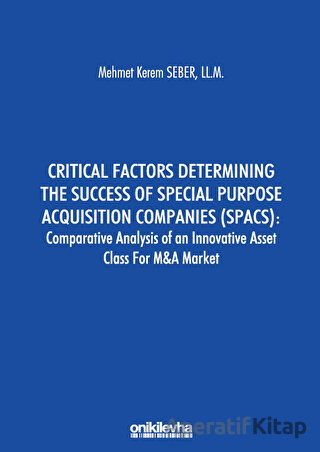
Critical Factors Determining the Success of Special Purpose Acquisition Companies SPACS Comparative Analysis of an Innovative Asset Class for M A Market
Mehmet Kerem SeberOn İki Levha Yayınları
Critical Factors Determining the Success of Special Purpose Acquisition Companies SPACS Comparative Analysis of an Innovative Asset Class for M A Market
Mehmet Kerem SeberThis book is based on the authors dissertation submitted in 2017 as part of his LLM degree in Commercial and Corporate Law at Queen Mary University of London Special Purpose Acquisition Companies typically known in the marketplace as SPACs are innovative investment vehicles providing financial resources for M A transactions from capital markets The past two years have seen the US SPACs explode in popularity to such a degree that they substantially surpass traditional IPOs in 2021 representing almost 60 of the total new listings As part of the need for understanding this trajectory this book focuses on what the determinants of the US SPACs success are which ones are associated with failure and based on these findings if it is possible to suggest a list of metrics to describe what a model of successful SPAC would look like The book also provides a general overview of the Turkish regulatory landscape pertaining to SPACs and analyses the reasons why SPACs have remained an untested asset class which prompted the authors second research question as to whether or not there are any regulatory and contractual improvement areas for the Turkish SPACs and whether it is possible to offer some key recommendations to practitioners and regulators to increase the attractiveness of the Turkish SPACs TABLE OF CONTENTS 1 INTRODUCTION 2 EVOLUTION AND THE TYPICAL LIFECYCLE OF THE US SPACS 2 1 Pre 2003 Period 2 2 Post 2003 and Present 2 3 The Typical Lifecycle of the Modern US SPACs 2 3 1 Formation 2 3 2 IPO 2 3 3 Exit Business Combination or Liquidation A Business Combination B Liquidation 2 4 Flow Chart of a Successful Business Combination 3 CRITICAL SUCCESS FACTORS OF THE US SPACS 3 1 Ownership Structure 3 2 Board Structure 3 3 The Role of SPAC Management 3 4 The Role of Underwriters 3 5 IPO Size 3 6 Escrow 3 7 Target Identification 3 8 Shareholder Activism and Tender Offers 3 9 Market Conditions 3 10 Streamlining Regulation 3 11 Key Success Metrics 4 AN UNTESTED ASSET CLASS TURKISH SPACS 4 1 Essentials 4 2 The Typical Lifecycle of the Turkish SPACs 4 2 1 Formation 4 2 2 IPO 4 2 3 Exit Merger or Liquidation A Merger B Liquidation 4 3 Recommendations 5 CONCLUSIONS BIBLIOGRAPHY Yayınevi On İki Levha Yayınları Yazar Mehmet Kerem Seber Sayfa 53 Sayfa Kağıt 1 Hamur Boyut 16 00x23 50 cm Basım Yılı Temmuz 2022 Barkod 9786254321955 Kategori Araştırma İnceleme Kuram Pazarlama Satış Reklam
On İki Levha Yayınları
This book is based on the author s dissertation submitted in 2017 as part of his LLM degree in Commercial and Corporate Law at Queen Mary University of London Special Purpose Acquisition Companies typically known in the marketplace as SPACs are innovative investment vehicles providing financial resources for M A transactions from capital markets The past two years have seen the US SPACs explode in popularity to such a degree that they substantially surpass traditional IPOs in 2021 representing almost 60 of the total new listings As part of the need for understanding this trajectory this book focuses on what the determinants of the US SPACs success are which ones are associated with failure and based on these findings if it is possible to suggest a list of metrics to describe what a model of successful SPAC would look like The book also provides a general overview of the Turkish regulatory landscape pertaining to SPACs and analyses the reasons why SPACs have remained an untested asset class which prompted the author s second research question as to whether or not there are any regulatory and contractual improvement areas for the Turkish SPACs and whether it is possible to offer some key recommendations to practitioners and regulators to increase the attractiveness of the Turkish SPACs TABLE OF CONTENTS1 INTRODUCTION2 EVOLUTION AND THE TYPICAL LIFECYCLE OF THE US SPACS2 1 Pre 2003 Period2 2 Post 2003 and Present2 3 The Typical Lifecycle of the Modern US SPACs2 3 1 Formation2 3 2 IPO2 3 3 Exit Business Combination or Liquidation A Business Combination B Liquidation2 4 Flow Chart of a Successful Business Combination3 CRITICAL SUCCESS FACTORS OF THE US SPACS3 1 Ownership Structure3 2 Board Structure3 3 The Role of SPAC Management3 4 The Role of Underwriters3 5 IPO Size3 6 Escrow3 7 Target Identification3 8 Shareholder Activism and Tender Offers3 9 Market Conditions3 10 Streamlining Regulation3 11 Key Success Metrics4 AN UNTESTED ASSET CLASS TURKISH SPACS4 1 Essentials4 2 The Typical Lifecycle of the Turkish SPACs4 2 1 Formation4 2 2 IPO4 2 3 Exit Merger or Liquidation A Merger B Liquidation4 3 Recommendations5 CONCLUSIONSBIBLIOGRAPHY
On İki Levha Yayınları
This book is based on the author s dissertation submitted in 2017 as part of his LLM degree in Commercial and Corporate Law at Queen Mary University of London Special Purpose Acquisition Companies typically known in the marketplace as SPACs are innovative investment vehicles providing financial resources for M A transactions from capital markets The past two years have seen the US SPACs explode in popularity to such a degree that they substantially surpass traditional IPOs in 2021 representing almost 60 of the total new listings As part of the need for understanding this trajectory this book focuses on what the determinants of the US SPACs success are which ones are associated with failure and based on these findings if it is possible to suggest a list of metrics to describe what a model of successful SPAC would look like The book also provides a general overview of the Turkish regulatory landscape pertaining to SPACs and analyses the reasons why SPACs have remained an untested asset class which prompted the author s second research question as to whether or not there are any regulatory and contractual improvement areas for the Turkish SPACs and whether it is possible to offer some key recommendations to practitioners and regulators to increase the attractiveness of the Turkish SPACs TABLE OF CONTENTS1 INTRODUCTION2 EVOLUTION AND THE TYPICAL LIFECYCLE OF THE US SPACS2 1 Pre 2003 Period2 2 Post 2003 and Present2 3 The Typical Lifecycle of the Modern US SPACs2 3 1 Formation2 3 2 IPO2 3 3 Exit Business Combination or Liquidation A Business Combination B Liquidation2 4 Flow Chart of a Successful Business Combination3 CRITICAL SUCCESS FACTORS OF THE US SPACS3 1 Ownership Structure3 2 Board Structure3 3 The Role of SPAC Management3 4 The Role of Underwriters3 5 IPO Size3 6 Escrow3 7 Target Identification3 8 Shareholder Activism and Tender Offers3 9 Market Conditions3 10 Streamlining Regulation3 11 Key Success Metrics4 AN UNTESTED ASS
On İki Levha Yayıncılık
This book is based on the author s dissertation submitted in 2017 as part of his LLM degree in Commercial and Corporate Law at Queen Mary University of London Special Purpose Acquisition Companies typically known in the marketplace as SPACs are innovative investment vehicles providing financial resources for M A transactions from capital markets The past two years have seen the US SPACs explode in popularity to such a degree that they substantially surpass traditional IPOs in 2021 representing almost 60 of the total new listings As part of the need for understanding this trajectory this book focuses on what the determinants of the US SPACs success are which ones are associated with failure and based on these findings if it is possible to suggest a list of metrics to describe what a model of successful SPAC would look like The book also provides a general overview of the Turkish regulatory landscape pertaining to SPACs and analyses the reasons why SPACs have remained an untested asset class which prompted the author s second research question as to whether or not there are any regulatory and contractual improvement areas for the Turkish SPACs and whether it is possible to offer some key recommendations to practitioners and regulators to increase the attractiveness of the Turkish SPACs