Decolonizing Empowerment — Taseer Salahuddin Alia Ahmed
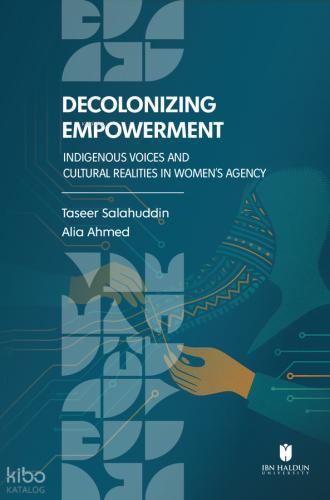
Decolonizing Empowerment
Taseer Salahuddin Alia Ahmedİbn Haldun Üniversitesi Yayınları
Decolonizing Empowerment
Taseer Salahuddin Alia AhmedDecolonizing Empowerment Indigenous Voices and Cultural Realities in Women s Agency challenges dominant Western centric notions of empowerment that often focus narrowly on individual autonomy economic independence and legal rights overlooking the rich cultural realities of women s lives By centering indigenous voices this book addresses a critical gap in scholarship and invites readers to rethink what empowerment truly means within social cultural and spiritual contexts Focusing on indigenous and marginalized women primarily in Punjab Pakistan the book explores how agency resilience and empowerment are experienced through family community cultural traditions and indigenous knowledge systems Through fifty six in depth narrative inquiries it reveals how women exercise influence and strength in ways that prioritize collective wellbeing intergenerational solidarity and environmental responsibility beyond individual success or material gain Employing participatory qualitative methods including narrative inquiry ethnography and a robust mixed methods design the research captures women s stories authentically ensuring that their perspectives and cultural realities shape the analysis This volume reframes empowerment as relational multidimensional and culturally grounded It highlights women s strategies of resistance leadership and community stewardship offering a holistic framework that bridges global feminist and development discourses with local lived realities Essential for scholars policymakers and practitioners in gender studies development and cultural studies Decolonizing Empowerment demonstrates that true empowerment emerges from within rooted in culture dignity and shared humanity and offers a transformative vision for inclusive context sensitive social change
İbn Haldun Üniversitesi Yayınları
Decolonizing Empowerment Indigenous Voices and Cultural Realities in Women s Agency challenges dominant Western centric notions of empowerment that often focus narrowly on individual autonomy economic independence and legal rights overlooking the rich cultural realities of women s lives By centering indigenous voices this book addresses a critical gap in scholarship and invites readers to rethink what empowerment truly means within social cultural and spiritual contexts Focusing on indigenous and marginalized women primarily in Punjab Pakistan the book explores how agency resilience and empowerment are experienced through family community cultural traditions and indigenous knowledge systems Through fifty six in depth narrative inquiries it reveals how women exercise influence and strength in ways that prioritize collective wellbeing intergenerational solidarity and environmental responsibility beyond individual success or material gain Employing participatory qualitative methods including narrative inquiry ethnography and a robust mixed methods design the research captures women s stories authentically ensuring that their perspectives and cultural realities shape the analysis This volume reframes empowerment as relational multidimensional and culturally grounded It highlights women s strategies of resistance leadership and community stewardship offering a holistic framework that bridges global feminist and development discourses with local lived realities Essential for scholars policymakers and practitioners in gender studies development and cultural studies Decolonizing Empowerment demonstrates that true empowerment emerges from within rooted in culture dignity and shared humanity and offers a transformative vision for inclusive context sensitive social change
İbn Haldun Üniversitesi Yayınları
Decolonizing Empowerment Indigenous Voices and Cultural Realities in Women s Agency challenges dominant Western centric notions of empowerment that often focus narrowly on individual autonomy economic independence and legal rights overlooking the rich cultural realities of women s lives By centering indigenous voices this book addresses a critical gap in scholarship and invites readers to rethink what empowerment truly means within social cultural and spiritual contexts Focusing on indigenous and marginalized women primarily in Punjab Pakistan the book explores how agency resilience and empowerment are experienced through family community cultural traditions and indigenous knowledge systems Through fifty six in depth narrative inquiries it reveals how women exercise influence and strength in ways that prioritize collective wellbeing intergenerational solidarity and environmental responsibility beyond individual success or material gain Employing participatory qualitative methods including narrative inquiry ethnography and a robust mixed methods design the research captures women s stories authentically ensuring that their perspectives and cultural realities shape the analysis This volume reframes empowerment as relational multidimensional and culturally grounded It highlights women s strategies of resistance leadership and community stewardship offering a holistic framework that bridges global feminist and development discourses with local lived realities Essential for scholars policymakers and practitioners in gender studies development and cultural studies Decolonizing Empowerment demonstrates that true empowerment emerges from within rooted in culture dignity and shared humanity and offers a transformative vision for inclusive context sensitive social change
İbn Haldun Üniversitesi Yayınları
Decolonizing Empowerment Indigenous Voices and Cultural Realities in Women s Agency challenges dominant Western centric notions of empowerment that often focus narrowly on individual autonomy economic independence and legal rights overlooking the rich cultural realities of women s lives By centering indigenous voices this book addresses a critical gap in scholarship and invites readers to rethink what empowerment truly means within social cultural and spiritual contexts Focusing on indigenous and marginalized women primarily in Punjab Pakistan the book explores how agency resilience and empowerment are experienced through family community cultural traditions and indigenous knowledge systems Through fifty six in depth narrative inquiries it reveals how women exercise influence and strength in ways that prioritize collective wellbeing intergenerational solidarity and environmental responsibility beyond individual success or material gain Employing participatory qualitative methods including narrative inquiry ethnography and a robust mixed methods design the research captures women s stories authentically ensuring that their perspectives and cultural realities shape the analysis This volume reframes empowerment as relational multidimensional and culturally grounded It highlights women s strategies of resistance leadership and community stewardship offering a holistic framework that bridges global feminist and development discourses with local lived realities Essential for scholars policymakers and practitioners in gender studies development and cultural studies Decolonizing Empowerment demonstrates that true empowerment emerges from within rooted in culture dignity and shared humanity and offers a transformative vision for inclusive context sensitive social change