Erotic Poems — Johann Wolfgang Von Goethe
Erotic Poems
Johann Wolfgang Von GoetheOxford University Press - Classics
Erotic Poems
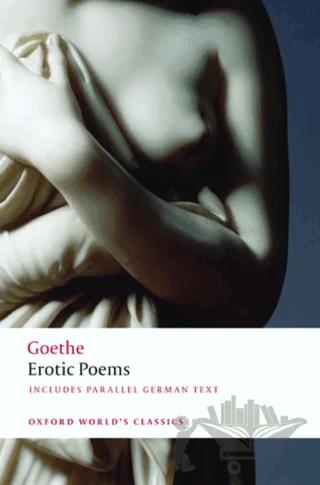
Johann Wolfgang Von GoetheThis bilingual edition of Goethe s erotic poems contains the Roman Elegies 1789 The Diary 1810 and a selection from the Venetian Epigrams of 1790 Editorial censorship has long obscured the true form and content of the Elegies which were inspired by Goethe s sexual liberation in Italy and his love for the woman he took as his unofficial wife on his return to Germany They are here presented as Goethe boldly conceived them together with the long surpressed narrative poem known as The Diary Superficially the story of a failed sexual adventure by a man of 60 at another level this is a profound study of the psychology of desire and the nature of fidelity as well as being one of the most beautiful and good humoured poems in the German language Completing the edition is a selection from Goethe s more light hearted and much censored cycle of erotica the Venetian Epigrams David Luke s translations do full justice to Goethe s aim of liberating German poetry and restoring sexual love to its central position in human life Hans Vaget s fine introduction provides the background to these poems as well as showing some of the profound and little known connections between them Johann Wolfgang Goethe was born in 1749 the son of a well to do citizen of Frankfurt In the early 1770 s he was the dominating figure of the German literary revival his tragic novel Werther bringing him international fame In 1755 he became a minister of state and director of the court theatre and in the 1790 s he and his younger contemporary Schiller were the joint architects of Weimar Classicism the central phase of German literary culture Faust written at various stages of his life and in a variety of styles became a constantly enlarged repository of his personal wisdom and his creative energies never ceased to take new forms In 1806 he married Christiane Vulpious having lived with her for eighteen years He died in 1832
Oxford University Press - Classics
This bilingual edition of Goethes erotic poems contains the Roman Elegies 1789 The Diary 1810 and a selection from the Venetian Epigrams of 1790 Editorial censorship has long obscured the true form and content of the Elegies which were inspired by Goethes sexual liberation in Italy and his love for the woman he took as his unofficial wife on his return to Germany They are here presented as Goethe boldly conceived them together with the long surpressed narrative poem known as The Diary Superficially the story of a failed sexual adventure by a man of 60 at another level this is a profound study of the psychology of desire and the nature of fidelity as well as being one of the most beautiful and good humoured poems in the German language Completing the edition is a selection from Goethes more light hearted and much censored cycle of erotica the Venetian Epigrams David Lukes translations do full justice to Goethes aim of liberating German poetry and restoring sexual love to its central position in human life Hans Vagets fine introduction provides the background to these poems as well as showing some of the profound and little known connections between them Johann Wolfgang Goethe was born in 1749 the son of a well to do citizen of Frankfurt In the early 1770s he was the dominating figure of the German literary revival his tragic novel Werther bringing him international fame In 1755 he became a minister of state and director of the court theatre and in the 1790s he and his younger contemporary Schiller were the joint architects of Weimar Classicism the central phase of German literary culture Faust written at various stages of his life and in a variety of styles became a constantly enlarged repository of his personal wisdom and his creative energies never ceased to take new forms In 1806 he married Christiane Vulpious having lived with her for eighteen years He died in 1832
Oxford University Press - Classics
This bilingual edition of Goethe s erotic poems contains the Roman Elegies 1789 The Diary 1810 and a selection from the Venetian Epigrams of 1790 Editorial censorship has long obscured the true form and content of the Elegies which were inspired by Goethe s sexual liberation in Italy and his love for the woman he took as his unofficial wife on his return to Germany They are here presented as Goethe boldly conceived them together with the long surpressed narrative poem known as The Diary Superficially the story of a failed sexual adventure by a man of 60 at another level this is a profound study of the psychology of desire and the nature of fidelity as well as being one of the most beautiful and good humoured poems in the German language Completing the edition is a selection from Goethe s more light hearted and much censored cycle of erotica the Venetian Epigrams David Luke s translations do full justice to Goethe s aim of liberating German poetry and restoring sexual love to its central position in human life Hans Vaget s fine introduction provides the background to these poems as well as showing some of the profound and little known connections between them Johann Wolfgang Goethe was born in 1749 the son of a well to do citizen of Frankfurt In the early 1770 s he was the dominating figure of the German literary revival his tragic novel Werther bringing him international fame In 1755 he became a minister of state and director of the court theatre and in the 1790 s he and his younger contemporary Schiller were the joint architects of Weimar Classicism the central phase of German literary culture Faust written at various stages of his life and in a variety of styles became a constantly enlarged repository of his personal wisdom and his creative energies never ceased to take new forms In 1806 he married Christiane Vulpious having lived with her for eighteen years He died in 1832