Fostering Mathematical Giftedness Creativity Through — Şeyma Şengil Akar
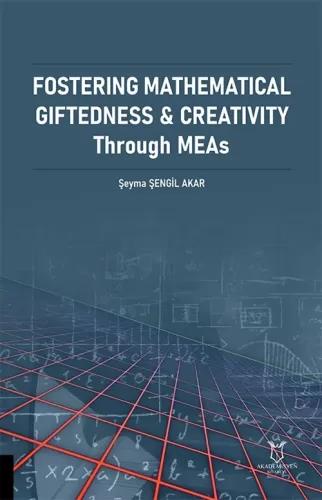
Fostering Mathematical Giftedness Creativity Through
Şeyma Şengil AkarAkademisyen Kitabevi
Fostering Mathematical Giftedness Creativity Through
Şeyma Şengil AkarCHAPTER 1 INTRODUCTION 1 1 Problem Statement 1 2 Purpose of the Study 1 3 Research Problems and Sub Problems 1 4 Importance of Research 1 6 Limitations and Restrictions 1 6 Definitions CHAPTER 2 THE THEORETICAL BASIS OF THE RESEARCH 2 1 The Concept of Giftedness From Past To Present 2 2 What is Giftedness in Mathematics 2 3 Development of Mathematical Ability 2 4 Mathematical Creativity 2 5 Sub Dimensions of Mathematical Creativity 2 6 Mathematical Modeling Activities and the Emergence ofMathematical Creativity 2 7 Related Research 2 7 1 Mathematical Giftedness and Mathematical Creativity Research 2 7 2 Studies Investigating Mathematical Creativity Based onMathematical Modeling Activities CHAPTER 3 METHOD 3 1 Research Design 3 1 1 Education in Science and Art Centers 3 1 2 Physical Structure of the Science and Art Center and School Culture 3 1 3 Mathematics Courses in Science and Art Centers 3 2 Selection of Participants and Focus Groups 3 2 1 Participants 3 2 2 First Focus Group Participants 3 2 3 Second Focus Group Participants 3 3 Data Collection Process 3 3 1 Pre Application 3 3 2 Pre Practice Observations 3 3 3 Data Collection 3 4 Data Collection Tools 3 5 Data Analysis Analysis and Coding 3 5 1 Analyses for the First and Second Research Problems 3 5 2 Analyses Analyzes and Coding for the Third Research Problem 3 6 Validity and Reliability 3 7 Ethics 3 8 Role of the Researcher CHAPTER 4 Contents FINDINGS AND COMMENTS 4 1 Mathematical Creativity of the First Focus Group 4 1 1 Students Creativity in the Process 4 1 1 1 Fluency and Flexibility 4 1 1 2 Progressivity 4 1 1 3 Mathematical Connections 4 1 2 Evaluation of Products in terms of Creativity 4 1 2 1 Quality and Generalizability 4 1 2 2 Originality 4 1 3 Students Common Creative Thinking Skills 4 1 4 Sample Case Analysis The Quilt Problem 4 1 4 1 Solving the Quilt Problem and Progressivity 4 1 4 2 Analysis of the Solution Process in terms of Creativity The Quilt Problem 4 1 4 2 1 Fluency 4 1 4 2 2 Flexibility 4 1 4 2 3 Attribution 4 1 4 2 4 Quality and Originality 4 2 Mathematical Creativity of the Second Focus Group 4 2 1 Students Creativity in the Process 4 2 1 1 Fluency and Flexibility 4 2 1 2 Progressivity 4 2 1 3 Mathematical Connections 4 2 2 Evaluation of Models in terms of Creativity 4 2 2 1 Quality and Generalizability 4 2 2 2 Originality 4 2 3 Students Common Creative Thinking Skills 4 2 4 Sample Situation Analysis Bigfoot 4 2 4 1 Solving the Bigfoot Problem and Progressivity 4 2 4 2 Creativity Analysis of the Resolution Process Big Foot 4 2 4 2 1 Fluency 4 2 4 2 2 Flexibility 4 2 4 2 3 Attribution 4 2 4 2 4 Quality and Originality 4 3 Individual Creativity of Gifted Students 4 3 1 Students Individual Mathematical Creativity in the Process 4 3 1 1 Ideas for the Allowance Problem 4 3 1 2 Students Fluent Thinking Skills 4 3 1 3 Students Flexible Thinking Skills 4 3 1 4 Students Associative Skills 4 3 1 5 Quality of Student Products 4 3 1 6 Originality of Student Products 4 3 2 Students Individual Creativity 4 4 Characteristics of Modeling Activities that Enable the Emergence of Mathematical Creativity 4 4 1 Comparison of Creativity of Two Focus Groups of Students 4 4 2 Characteristics of Modeling Activities 4 4 2 1 Library Problem 4 4 2 2 The Boss s Problem 4 4 2 3 Parking Problem 4 4 2 4 Quilt Problem 4 4 2 5 Bigfoot Problem CHAPTER 5 CONCLUSION AND RECOMMENDATIONS 5 1 Results on Group and Individual Creativity 5 2 Results on the Characteristics of Mathematical Modeling Activities 5 3 Recommendations 5 3 1 Recommendations for Practitioners 5 3 2 Recommendations for Researchers
Akademisyen Kitabevi
Şeyma Şengil Akar tarafından kaleme alınan Fostering Mathematical Giftedness Creativity Through Akademisyen Kitabevi eseri olarak okurlarla buluşuyor Fostering Mathematical Giftedness Creativity Through Şeyma Şengil Akar Kitap Özeti CHAPTER 1 INTRODUCTION 1 1 Problem Statement 1 2 Purpose of the Study 1 3 Research Problems and Sub Problems 1 4 Importance of Research 1 6 Limitations and Restrictions 1 6 Definitions CHAPTER 2 THE THEORETICAL BASIS OF THE RESEARCH 2 1 The Concept of Giftedness From Past To Present 2 2 What is Giftedness in Mathematics 2 3 Development of Mathematical Ability 2 4 Mathematical Creativity 2 5 Sub Dimensions of Mathematical Creativity 2 6 Mathematical Modeling Activities and the Emergence ofMathematical Creativity 2 7 Related Research 2 7 1 Mathematical Giftedness and Mathematical Creativity Research 2 7 2 Studies Investigating Mathematical Creativity Based onMathematical Modeling Activities CHAPTER 3 METHOD 3 1 Research Design 3 1 1 Education in Science and Art Centers 3 1 2 Physical Structure of the Science and Art Center and School Culture 3 1 3 Mathematics Courses in Science and Art Centers 3 2 Selection of Participants and Focus Groups 3 2 1 Participants 3 2 2 First Focus Group Participants 3 2 3 Second Focus Group Participants 3 3 Data Collection Process 3 3 1 Pre Application 3 3 2 Pre Practice Observations 3 3 3 Data Collection 3 4 Data Collection Tools 3 5 Data Analysis Analysis and Coding 3 5 1 Analyses for the First and Second Research Problems 3 5 2 Analyses Analyzes and Coding for the Third Research Problem 3 6 Validity and Reliability 3 7 Ethics 3 8 Role of the Researcher CHAPTER 4 FINDINGS AND COMMENTS 4 1 Mathematical Creativity of the First Focus Group 4 1 1 Students Creativity in the Process 4 1 1 1 Fluency and Flexibility 4 1 1 2 Progressivity 4 1 1 3 Mathematical Connections 4 1 2 Evaluation of Products in terms of Creativity 4 1 2 1 Quality and Generalizability 4 1 2 2 Originality 4 1 3 Students Common Creative Thinking Skills 4 1 4 Sample Case Analysis The Quilt Problem 4 1 4 1 Solving the Quilt Problem and Progressivity 4 1 4 2 Analysis of the Solution Process in terms of Creativity The Quilt Problem 4 1 4 2 1 Fluency 4 1 4 2 2 Flexibility 4 1 4 2 3 Attribution 4 1 4 2 4 Quality and Originality 4 2 Mathematical Creativity of the Second Focus Group 4 2 1 Students Creativity in the Process 4 2 1 1 Fluency and Flexibility 4 2 1 2 Progressivity 4 2 1 3 Mathematical Connections 4 2 2 Evaluation of Models in terms of Creativity 4 2 2 1 Quality and Generalizability 4 2 2 2 Originality 4 2 3 Students Common Creative Thinking Skills 4 2 4 Sample Situation Analysis Bigfoot 4 2 4 1 Solving the Bigfoot Problem and Progressivity 4 2 4 2 Creativity Analysis of the Resolution Process Big Foot 4 2 4 2 1 Fluency 4 2 4 2 2 Flexibility 4 2 4 2 3 Attribution 4 2 4 2 4 Quality and Originality 4 3 Individual Creativity of Gifted Students 4 3 1 Students Individual Mathematical Creativity in the Process 4 3 1 1 Ideas for the Allowance Problem 4 3 1 2 Students Fluent Thinking Skills 4 3 1 3 Students Flexible Thinking Skills 4 3 1 4 Students Associative Skills 4 3 1 5 Quality of Student Products 4 3 1 6 Originality of Student Products 4 3 Yayınevi Akademisyen Kitabevi Yazar Şeyma Şengil Akar Sayfa 243 Sayfa Kağıt 1 Hamur Boyut 16 00x24 00 cm Basım Yılı Aralık 2024 Barkod 9786253751951 Kategori Matematik
Akademisyen Kitabevi
CHAPTER 1 INTRODUCTION 1 1 Problem Statement 1 2 Purpose of the Study 1 3 Research Problems and Sub Problems 1 4 Importance of Research 1 6 Limitations and Restrictions 1 6 Definitions CHAPTER 2 THE THEORETICAL BASIS OF THE RESEARCH 2 1 The Concept of Giftedness From Past To Present 2 2 What is Giftedness in Mathematics 2 3 Development of Mathematical Ability 2 4 Mathematical Creativity 2 5 Sub Dimensions of Mathematical Creativity 2 6 Mathematical Modeling Activities and the Emergence ofMathematical Creativity 2 7 Related Research 2 7 1 Mathematical Giftedness and Mathematical Creativity Research 2 7 2 Studies Investigating Mathematical Creativity Based onMathematical Modeling Activities CHAPTER 3 METHOD 3 1 Research Design 3 1 1 Education in Science and Art Centers 3 1 2 Physical Structure of the Science and Art Center and School Culture 3 1 3 Mathematics Courses in Science and Art Centers 3 2 Selection of Participants and Focus Groups 3 2 1 Participants 3 2 2 First Focus Group Participants 3 2 3 Second Focus Group Participants 3 3 Data Collection Process 3 3 1 Pre Application 3 3 2 Pre Practice Observations 3 3 3 Data Collection 3 4 Data Collection Tools 3 5 Data Analysis Analysis and Coding 3 5 1 Analyses for the First and Second Research Problems 3 5 2 Analyses Analyzes and Coding for the Third Research Problem 3 6 Validity and Reliability 3 7 Ethics 3 8 Role of the Researcher CHAPTER 4 FINDINGS AND COMMENTS 4 1 Mathematical Creativity of the First Focus Group 4 1 1 Students Creativity in the Process 4 1 1 1 Fluency and Flexibility 4 1 1 2 Progressivity 4 1 1 3 Mathematical Connections 4 1 2 Evaluation of Products in terms of Creativity 4 1 2 1 Quality and Generalizability 4 1 2 2 Originality 4 1 3 Students Common Creative Thinking Skills 4 1 4 Sample Case Analysis The Quilt Problem 4 1 4 1 Solving the Quilt Problem and Progressivity 4 1 4 2 Analysis of the Solution Process in terms of Creativity The Quilt Problem 4 1 4 2 1 Fluency 4 1 4 2 2 Flexibility 4 1 4 2 3 Attribution 4 1 4 2 4 Quality and Originality 4 2 Mathematical Creativity of the Second Focus Group 4 2 1 Students Creativity in the Process 4 2 1 1 Fluency and Flexibility 4 2 1 2 Progressivity 4 2 1 3 Mathematical Connections 4 2 2 Evaluation of Models in terms of Creativity 4 2 2 1 Quality and Generalizability 4 2 2 2 Originality 4 2 3 Students Common Creative Thinking Skills 4 2 4 Sample Situation Analysis Bigfoot 4 2 4 1 Solving the Bigfoot Problem and Progressivity 4 2 4 2 Creativity Analysis of the Resolution Process Big Foot 4 2 4 2 1 Fluency 4 2 4 2 2 Flexibility 4 2 4 2 3 Attribution 4 2 4 2 4 Quality and Originality 4 3 Individual Creativity of Gifted Students 4 3 1 Students Individual Mathematical Creativity in the Process 4 3 1 1 Ideas for the Allowance Problem 4 3 1 2 Students Fluent Thinking Skills 4 3 1 3 Students Flexible Thinking Skills 4 3 1 4 Students Associative Skills 4 3 1 5 Quality of Student Products 4 3 1 6 Originality of Student Products 4 3 2 Students Individual Creativity 4 4 Characteristics of Modeling Activities that Enable the Emergence of Mathematical Creativity 4 4 1 Comparison of Creativity of Two Focus Groups of Students 4 4 2 Characteristics of Modeling Activities 4 4 2 1 Library Problem 4 4 2 2 The Boss s Problem 4 4 2 3 Parking Problem 4 4 2 4 Quilt Problem 4 4 2 5 Bigfoot Problem CHAPTER 5 CONCLUSION AND RECOMMENDATIONS 5 1 Results on Group and Individual Creativity 5 2 Results on the Characteristics of Mathematical Modeling Activities 5 3 Recommendations 5 3 1 Recommendations for Practitioners 5 3 2 Recommendations for Researchers
Akademisyen Kitabevi
CHAPTER 1INTRODUCTION1 1 Problem Statement 1 2 Purpose of the Study1 3 Research Problems and Sub Problems1 4 Importance of Research1 6 Limitations and Restrictions1 6 DefinitionsCHAPTER 2THE THEORETICAL BASIS OF THE RESEARCH2 1 The Concept of Giftedness From Past To Present2 2 What is Giftedness in Mathematics 2 3 Development of Mathematical Ability2 4 Mathematical Creativity2 5 Sub Dimensions of Mathematical Creativity2 6 Mathematical Modeling Activities and the Emergence ofMathematical Creativity2 7 Related Research2 7 1 Mathematical Giftedness and Mathematical Creativity Research2 7 2 Studies Investigating Mathematical Creativity Based onMathematical Modeling ActivitiesCHAPTER 3METHOD3 1 Research Design3 1 1 Education in Science and Art Centers3 1 2 Physical Structure of the Science and Art Center and School Culture3 1 3 Mathematics Courses in Science and Art Centers3 2 Selection of Participants and Focus Groups3 2 1 Participants 3 2 2 First Focus Group Participants 3 2 3 Second Focus Group Participants 3 3 Data Collection Process 3 3 1 Pre Application 3 3 2 Pre Practice Observations 3 3 3 Data Collection 3 4 Data Collection Tools 3 5 Data Analysis Analysis and Coding 3 5 1 Analyses for the First and Second Research Problems 3 5 2 Analyses Analyzes and Coding for the Third Research Problem 3 6 Validity and Reliability 3 7 Ethics3 8 Role of the Researcher CHAPTER 4 FINDINGS AND COMMENTS 4 1 Mathematical Creativity of the First Focus Group 4 1 1 Students Creativity in the Process 4 1 1 1 Fluency and Flexibility 4 1 1 2 Progressivity 4 1 1 3 Mathematical Connections 4 1 2 Evaluation of Products in terms of Creativity 4 1 2 1 Quality and Generalizability 4 1 2 2 Originality 4 1 3 Students Common Creative Thinking Skills 4 1 4 Sample Case Analysis The Quilt Problem 4 1 4 1 Solving the Quilt Problem and Progressivity 4 1 4 2 Analysis of the Solution Process in terms of Creativity The Quilt Problem 4 1 4 2 1 Fluency 4