Fundamental Principles Of The Metaphysic Of Morals — Immanuel Kant
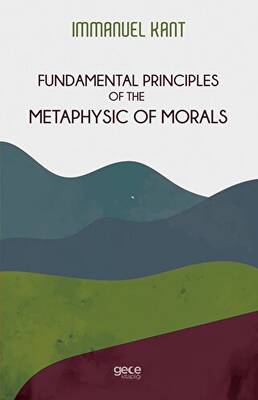
Fundamental Principles Of The Metaphysic Of Morals
Immanuel KantGece Kitaplığı
Fundamental Principles Of The Metaphysic Of Morals
Immanuel KantFor love as an affection cannot be commanded but beneficence for duty s sake may even though we are not impelled to it by any inclination nay are even repelled by a natural and unconquerable aversion This is practical love and not pathological a love which is seated in the will and not in the propensions of sense in principles of action and not of tender sympathy and it is this love alone which can be commanded
Gece Kitaplığı
For love as an affection cannot be commanded but beneficence for duty s sake may even though we are not impelled to it by any inclination nay are even repelled by a natural and unconquerable aversion This is practical love and not pathological a love which is seated in the will and not in the propensions of sense in principles of action and not of tender sympathy and it is this love alone which can be commanded Tanıtım Bülteninden
Gece Kitaplığı
Immanuel Kant tarafından kaleme alınan Fundamental Principles of The Metaphysic of Morals Gece Kitaplığı eseri olarak okurlarla buluşuyor Fundamental Principles of The Metaphysic of Morals Immanuel Kant Kitap Özeti For love as an affection cannot be commanded but beneficence for dutys sake may even though we are not impelled to it by any inclination nay are even repelled by a natural and unconquerable aversion This is practical love and not pathological a love which is seated in the will and not in the propensions of sense in principles of action and not of tender sympathy and it is this love alone which can be commanded Yayınevi Gece Kitaplığı Yazar Immanuel Kant Sayfa 87 Sayfa Kağıt 2 Hamur Boyut 13 50x21 00 cm Basım Yılı Mayıs 2021 Barkod 9786257411370 Kategori Yabancı Dilde Kitaplar Düşünce
Gece Kitaplığı
For love as an affection cannot be commanded but beneficence for duty s sake may even though we are not impelled to it by any inclination nay are even repelled by a natural and unconquerable aversion This is practical love and not pathological a love which is seated in the will and not in the propensions of sense in principles of action and not of tender sympathy and it is this love alone which can be commanded
Paper Books
What Makes an Action Truly Moral In this groundbreaking philosophical work Immanuel Kant lays the foundation for a universal system of ethics rooted not in consequence but in reason and duty Fundamental Principles of the Metaphysic of Morals introduces the concept of the categorical imperative a moral law derived from pure reason demanding that we act only according to principles we would will to be universal laws Challenging both utilitarianism and moral relativism Kant argues that the only thing good without qualification is a good will From this idea he builds a framework where freedom dignity and rationality define the moral worth of human beings Concise yet profound this seminal text is essential reading for anyone interested in philosophy ethics or the enduring question of how we ought to live
Gece Kitaplığı Yayınları
For love as an affection cannot be commanded but beneficence for duty s sake may even though we are not impelled to it by any inclination nay are even repelled by a natural and unconquerable aversion This is practical love and not pathological a love which is seated in the will and not in the propensions of sense in principles of action and not of tender sympathy and it is this love alone which can be commanded
Paper Books
What Makes an Action Truly Moral In this groundbreaking philosophical work Immanuel Kant lays the foundation for a universal system of ethics rooted not in consequence but in reason and duty Fundamental Principles of the Metaphysic of Morals introduces the concept of the categorical imperative a moral law derived from pure reason demanding that we act only according to principles we would will to be universal laws Challenging both utilitarianism and moral relativism Kant argues that the only thing good without qualification is a good will From this idea he builds a framework where freedom dignity and rationality define the moral worth of human beings Concise yet profound this seminal text is essential reading for anyone interested in philosophy ethics or the enduring question of how we ought to live
Paper Books
What Makes an Action Truly Moral In this groundbreaking philosophical work Immanuel Kant lays the foundation for a universal system of ethics rooted not in consequence but in reason and duty Fundamental Principles of the Metaphysic of Morals introduces the concept of the categorical imperative a moral law derived from pure reason demanding that we act only according to principles we would will to be universal laws Challenging both utilitarianism and moral relativism Kant argues that the only thing good without qualification is a good will From this idea he builds a framework where freedom dignity and rationality define the moral worth of human beings Concise yet profound this seminal text is essential reading for anyone interested in philosophy ethics or the enduring question of how we ought to live
Paper Books
What Makes an Action Truly Moral In this groundbreaking philosophical work Immanuel Kant lays the foundation for a universal system of ethics rooted not in consequence but in reason and duty Fundamental Principles of the Metaphysic of Morals introduces the concept of the categorical imperative a moral law derived from pure reason demanding that we act only according to principles we would will to be universal laws Challenging both utilitarianism and moral relativism Kant argues that the only thing good without qualification is a good will From this idea he builds a framework where freedom dignity and rationality define the moral worth of human beings Concise yet profound this seminal text is essential reading for anyone interested in philosophy ethics or the enduring question of how we ought to live
Gece Kitaplığı
Logic cannot have any empirical part that is a part in which the universal and necessary laws of thought should rest on grounds taken from experience otherwise it would not be logic i e a canon for the understanding or the reason valid for all thought and capable of demonstration Natural and moral philosophy on the contrary can each have their empirical part since the former has to determine the laws of nature as an object of experience the latter the laws of the human will so far as it is affected by nature the former however being laws according to which everything does happen the latter laws according to which everything ought to happen Ethics however must also consider the conditions under which what ought to happen frequently does not Tanıtım Bülteninden
Gece Kitaplığı
Prolegomena however are designed for preparatory exercises they are intended rather to point out what we have to do in order if possible to actualise a science than to propound it They must therefore rest upon something already known as trustworthy from which we can set out with confidence and ascend to sources as yet unknown the discovery of which will not only explain to us what we knew but exhibit a sphere of many cognitions which all spring from the same sources The method of Prolegomena especially of those designed as a preparation for future metaphysics is consequently analytical
Gece Kitaplığı
Prolegomena however are designed for preparatory exercises they are intended rather to point out what we have to do in order if possible to actualise a science than to propound it They must therefore rest upon something already known as trustworthy from which we can set out with confidence and ascend to sources as yet unknown the discovery of which will not only explain to us what we knew but exhibit a sphere of many cognitions which all spring from the same sources The method of Prolegomena especially of those designed as a preparation for future metaphysics is consequently analytical Tanıtım Bülteninden
Gece Kitaplığı Yayınları
Mantığın ampirik bir parçası olamaz yani düşüncenin evrensel ve zorunlu yasalarının deneyimden alınan temellere dayanması gereken bir bölüm aksi halde mantık olmazdı yani anlama ya da akıl için bir kanon her düşünce için geçerli ve kanıtlamaya muktedir olmazdı Tersine doğal ve ahlaki felsefenin her birinin kendi ampirik kısmı olabilir çünkü birincisi bir deneyim nesnesi olarak doğanın yasalarını belirlemek zorundadır ikincisi doğadan etkilendiği sürece insan iradesinin yasalarıdır ancak birincisi her şeyin kendisine göre gerçekleştiği yasalardır ikincisi her şeyin olması gerektiği gibi olan yasalar Ancak etik sık sık olması gerekenin gerçekleşmediği koşulları da göz önünde bulundurmalıdır
Gece Kitaplığı
Immanuel Kant tarafından kaleme alınan Kant s Prolegomena To Any Future Metaphysics Gece Kitaplığı eseri olarak okurlarla buluşuyor Kant s Prolegomena To Any Future Metaphysics Immanuel Kant Kitap Özeti Prolegomena however are designed for preparatory exercises they are intended rather to point out what we have to do in order if possible to actualise a science than to propound it They must therefore rest upon something already known as trustworthy from which we can set out with confidence and ascend to sources as yet unknown the discovery of which will not only explain to us what we knew but exhibit a sphere of many cognitions which all spring from the same sources The method of Prolegomena especially of those designed as a preparation for future metaphysics is consequently analytical Yayınevi Gece Kitaplığı Yazar Immanuel Kant Sayfa 146 Sayfa Kağıt 2 Hamur Boyut 13 50x21 00 cm Basım Yılı Haziran 2021 Barkod 9786257426701 Kategori Diğer Felsefe Kitapları
Gece Kitaplığı
Prolegomena however are designed for preparatory exercises they are intended rather to point out what we have to do in order if possible to actualise a science than to propound it They must therefore rest upon something already known as trustworthy from which we can set out with confidence and ascend to sources as yet unknown the discovery of which will not only explain to us what we knew but exhibit a sphere of many cognitions which all spring from the same sources The method of Prolegomena especially of those designed as a preparation for future metaphysics is consequently analytical
Gece Kitaplığı
Prolegomena however are designed for preparatory exercises they are intended rather to point out what we have to do in order if possible to actualise a science than to propound it They must therefore rest upon something already known as trustworthy from which we can set out with confidence and ascend to sources as yet unknown the discovery of which will not only explain to us what we knew but exhibit a sphere of many cognitions which all spring from the same sources The method of Prolegomena especially of those designed as a preparation for future metaphysics is consequently analytical img src https s3 eu west 1 amazonaws com dia kitadagitim ckeditor_assets pictures 53 content_1_original_original jpg alt height 15 width 15 font size 1 color white font img
Gece Kitaplığı Yayınları
Prolegomena however are designed for preparatory exercises they are intended rather to point out what we have to do in order if possible to actualise a science than to propound it They must therefore rest upon something already known as trustworthy from which we can set out with confidence and ascend to sources as yet unknown the discovery of which will not only explain to us what we knew but exhibit a sphere of many cognitions which all spring from the same sources The method of Prolegomena especially of those designed as a preparation for future metaphysics is consequently analytical
Oxford University Press - Classics
In the Groundwork for the Metaphysics of Morals 1785 Immanuel Kant makes clear his two central intentions first to uncover the principle that underpins morality and secondly to defend its applicability to human beings The result is one of the most significant texts in the history of ethics and a masterpiece of Enlightenment thinking Kant argues that moral law tells us to act only in ways that others could also act thereby treating them as ends in themselves and not merely as means Kant contends that despite apparent threats to our freedom from science and to ethics from our self interest we can nonetheless take ourselves to be free rational agents who as such have a motivation to act on this moral law and thus the ability to act as moral beings One of the most studied works of moral philosophy this new translation by Robert Stern Joe Saunders and Christopher Bennett illuminates this famous text for modern readers