Group Psychology And The Analysis Of The Ego — Sigmund Freud

Group Psychology And The Analysis Of The Ego
Sigmund FreudLiber Publishing
Group Psychology And The Analysis Of The Ego
Sigmund FreudGroup Psychology and the Analysis of the Ego German Massenpsychologie und Ich Analyse is a 1921 book by Sigmund Freud the founder of psychoanalysis In this monograph Freud describes psychological mechanisms at work within mass movements A mass according to Freud is a temporary entity consisting of heterogeneous elements that have joined together for a moment He refers heavily to the writings of sociologist and psychologist Gustave Le Bon 1841 1931 summarizing his work at the beginning of the book in the chapter Le Bons Schilderung der Massenseele Le Bon s description of the group mind Like Le Bon Freud says that as part of the mass the individual acquires a sense of infinite power allowing him to act on impulses that he would otherwise have to curb as an isolated individual These feelings of power and security allow the individual not only to act as part of the mass but also to feel safety in numbers This is accompanied however by a loss of conscious personality and a tendency of the individual to be infected by any emotion within the mass and to amplify the emotion in turn by mutual induction Overall the mass is impulsive changeable and irritable It is controlled almost exclusively by the unconscious

Liber Publishing
Group Psychology and the Analysis of the Ego German Massenpsychologie und Ich Analyse is a 1921 book by Sigmund Freud the founder of psychoanalysis In this monograph Freud describes psychological mechanisms at work within mass movements A mass according to Freud is a temporary entity consisting of heterogeneous elements that have joined together for a moment He refers heavily to the writings of sociologist and psychologist Gustave Le Bon 1841 1931 summarizing his work at the beginning of the book in the chapter Le Bons Schilderung der Massenseele Le Bon s description of the group mind Like Le Bon Freud says that as part of the mass the individual acquires a sense of infinite power allowing him to act on impulses that he would otherwise have to curb as an isolated individual These feelings of power and security allow the individual not only to act as part of the mass but also to feel safety in numbers This is accompanied however by a loss of conscious personality and a tendency of the individual to be infected by any emotion within the mass and to amplify the emotion in turn by mutual induction Overall the mass is impulsive changeable and irritable It is controlled almost exclusively by the unconscious
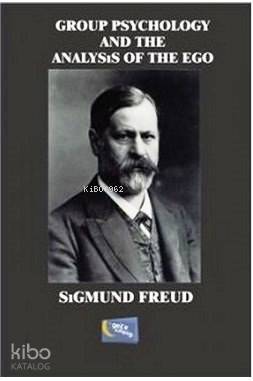
Gece Kitaplığı Yayınları
In Group Psychology and the Analysis of the Ego 1922 Sigmund Freud based his preliminary description of group psychology on Le Bon s work but went on to develop his own original theory related to what he had begun to elaborate in Totem and Taboo Theodor Adorno reprised Freud s essay in 1951 with his Freudian Theory and the Pattern of Fascist Propaganda and said that It is not an overstatement if we say that Freud though he was hardly interested in the political phase of the problem clearly foresaw the rise and nature of fascist mass movements in purely psychological categories Chapter I Introduction The contrast between Individual Psychology and Social or Group Psychology which at a first glance may seem to be full of significance loses a great deal of its sharpness when it is examined more closely It is true that Individual Psychology is concerned with the individual man and explores the paths by which he seeks to find satisfaction for his instincts but only rarely and under certain exceptional conditions is Individual Psychology in a position to disregard the relations of this individual to others In the individual s mental life someone else is invariably involved as a model as an object as a helper as an opponent and so from the very first Individual Psychology is at the same time Social Psychology as well in this extended but entirely justifiable sense of the words

Gece Kitaplığı
çev. Murat Ukray
In Group Psychology and the Analysis of the Ego 1922 Sigmund Freud based his preliminary description of group psychology on Le Bon s work but went on to develop his own original theory related to what he had begun to elaborate in Totem and Taboo Theodor Adorno reprised Freud s essay in 1951 with his Freudian Theory and the Pattern of Fascist Propaganda and said that It is not an overstatement if we say that Freud though he was hardly interested in the political phase of the problem clearly foresaw the rise and nature of fascist mass movements in purely psychological categories img src https s3 eu west 1 amazonaws com dia kitadagitim ckeditor_assets pictures 53 content_1_original_original jpg alt height 15 width 15 font size 1 color white font img

Liber Publishing
Group Psychology and the Analysis of the Ego German Massenpsychologie und Ich Analyse is a 1921 book by Sigmund Freud the founder of psychoanalysis In this monograph Freud describes psychological mechanisms at work within mass movements A mass according to Freud is a temporary entity consisting of heterogeneous elements that have joined together for a moment He refers heavily to the writings of sociologist and psychologist Gustave Le Bon 1841 1931 summarizing his work at the beginning of the book in the chapter Le Bons Schilderung der Massenseele Le Bon s description of the group mind Like Le Bon Freud says that as part of the mass the individual acquires a sense of infinite power allowing him to act on impulses that he would otherwise have to curb as an isolated individual These feelings of power and security allow the individual not only to act as part of the mass but also to feel safety in numbers This is accompanied however by a loss of conscious personality and a tendency of the individual to be infected by any emotion within the mass and to amplify the emotion in turn by mutual induction Overall the mass is impulsive changeable and irritable It is controlled almost exclusively by the unconscious

Liber Publishing
Group Psychology and the Analysis of the Ego German Massenpsychologie und Ich Analyse is a 1921 book by Sigmund Freud the founder of psychoanalysis In this monograph Freud describes psychological mechanisms at work within mass movements A mass according to Freud is a temporary entity consisting of heterogeneous elements that have joined together for a moment He refers heavily to the writings of sociologist and psychologist Gustave Le Bon 1841 1931 summarizing his work at the beginning of the book in the chapter Le Bons Schilderung der Massenseele Le Bon s description of the group mind Like Le Bon Freud says that as part of the mass the individual acquires a sense of infinite power allowing him to act on impulses that he would otherwise have to curb as an isolated individual These feelings of power and security allow the individual not only to act as part of the mass but also to feel safety in numbers This is accompanied however by a loss of conscious personality and a tendency of the individual to be infected by any emotion within the mass and to amplify the emotion in turn by mutual induction Overall the mass is impulsive changeable and irritable It is controlled almost exclusively by the unconscious Tanıtım Bülteninden

Paper Books
Group Psychology and the Analysis of the Ego is a 1921 book by Sigmund Freud the founder of psychoanalysis In this monograph Freud describes psychological mechanisms at work within mass movements A mass according to Freud is a temporary entity consisting of heterogeneous elements that have joined together for a moment He refers heavily to the writings of sociologist and psychologist Gustave Le Bon 1841 1931 summarizing his work at the beginning of the book in the chapter Le Bon s description of the group mind Like Le Bon Freud says that as part of the mass the individual acquires a sense of infinite power allowing him to act on impulses that he would otherwise have to curb as an isolated individual These feelings of power and security allow the individual not only to act as part of the mass but also to feel safety in numbers This is accompanied however by a loss of conscious personality and a tendency of the individual to be infected by any emotion within the mass and to amplify the emotion in turn by mutual induction Overall the mass is impulsive changeable and irritable It is controlled almost exclusively by the unconscious Freud extensively quotes Le Bon who explains that the state of the individual in the crowd is hypnotic with which Freud agrees He adds that the contagion and the higher suggestibility are different kinds of change of the individual in de mass Tanıtım Bülteninden

Alter Yayınları
Group Psychology and the Analysis of the Ego

Paper Books
Group Psychology and the Analysis of the Ego is a 1921 book by Sigmund Freud the founder of psychoanalysis In this monograph Freud describes psychological mechanisms at work within mass movements A mass according to Freud is a temporary entity consisting of heterogeneous elements that have joined together for a moment He refers heavily to the writings of sociologist and psychologist Gustave Le Bon 1841 1931 summarizing his work at the beginning of the book in the chapter Le Bon s description of the group mind Like Le Bon Freud says that as part of the mass the individual acquires a sense of infinite power allowing him to act on impulses that he would otherwise have to curb as an isolated individual These feelings of power and security allow the individual not only to act as part of the mass but also to feel safety in numbers This is accompanied however by a loss of conscious personality and a tendency of the individual to be infected by any emotion within the mass and to amplify the emotion in turn by mutual induction Overall the mass is impulsive changeable and irritable It is controlled almost exclusively by the unconscious Freud extensively quotes Le Bon who explains that the state of the individual in the crowd is hypnotic with which Freud agrees He adds that the contagion and the higher suggestibility are different kinds of change of the individual in de mass

Alter Yayınları