One Thousand Years of Turkish Carpets — Oktay Aslanapa
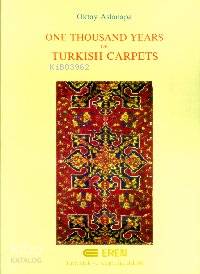
One Thousand Years of Turkish Carpets
Oktay AslanapaEren Yayıncılık ve Kitapçılık
One Thousand Years of Turkish Carpets
Oktay AslanapaThe art of knotted carpets is a gift of the Turks to world civilization its history through the centuries is woven into the fabric of Turkish culture Since its basic material is wool carpet weaving is an activity of sheep raising communities And in fact the word sheep koyun has often been incorporated into some of the famous names of Turkish tribes for example the Karakoyunlu and the Akkoyunlu Recent investigations have shed new light on the much discussed question of whether the origins of Turkish carpet art go back in ancient times to the Pazyryk carpet or not On the horse trappings found in Pazyryk and now preserved in the Hermitage Museum Leningrad are some inscriptions in Gökturc script inscribed in the wood Osman Nedim Tuna a Turcologist at the University of Pennsylvania has deciphered some Turkish words in the inscription and has been trying to establish a meaningful link between them Thus the relationship of the Pazyryk mounds with the Huns becomes clearer Among the small carpet fragments of the 3rd and 4th centuries found by Sir Aurel Stein in East Turkestan besides those tied with a single weft is another fragment with a pattern of lozenge ft shows a different technique Turkish knots Gördes tied to alternate wefts In Anatolia this technique an old tradition goes back to the Selçuk Period A nomad carpet in the Museum of Turkish and Islamic Arts Istanbul Inv 191 111 J9 shows a continuation of this old tradition not only with its technique but also with its motifs This technique which was brought to Anatolia by the Oghuz Turks has survived up to the middle of the 19th century In it the Turkish knot is used in a different manner the knots are tied to the weft in two different ways in alternate rows According to the investigations of Şerare Yetkin a carpet fragment 42x29 5 cm in the storeroom of the Museum of Islamic Art Berlin closely resembles this nomad carpet III 19 in technique and motifs Two similar carpets have recently been sold in London by Lefevre and Partners Two more carpets which show the same technique and motifs are in the Rijks museum Amsterdam and in the Textile Museum Washington DC It has also been established that the same technique has been applied on the border of the large Selçuk carpet with the motifs of the camel foot in the Museum of Turkish and Islamic Arts Istanbul Carpet art in every historical period has been related to other arts and shows a parallel development In the first half of the 16th century the painter Ustad Shah Kulu of the Ottoman Palace Workshop Nakkaşhane created a new style of painting called the reed style Saz üslubu which was different f rom that used in the classical miniatures It was one based on a tradition which goes back to the 14th and 15th centuries In this style color and line combine with each other forming the basic element with the same values and contours Serrated leaves called reeds saz hatayı and buds which appear in the paintings of this style have influenced textile illumination ceramic tile and Palace carpet designs of the period Dragons phoenixes deer and pheasants which also appear in the paintings of the reed style sometimes appear in the Ottoman tiles such as those in the Circumcision Room and the Baghdad Kioshk in the Topkapi Palace Istanbul But they were never used as the main motif s as were the serrated leaves hatayis and the buds
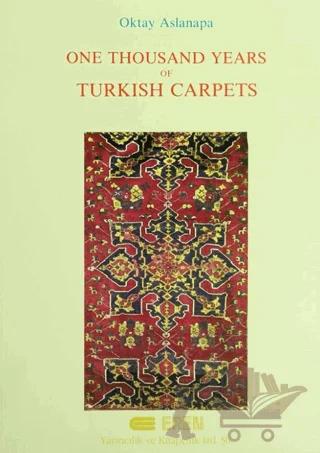
Eren Yayıncılık
The art of knotted carpets is a gift of the Turks to world civilasitions its history through the centuries is woven into the fabric of Turkish culture This book begins with a look at early carpet fraglents those prior to the first Turkic migrations
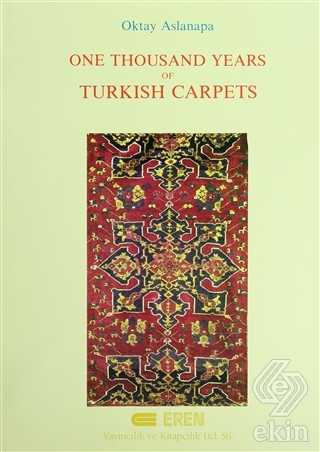
Eren Yayıncılık
The art of knotted carpets is a gift of the Turks to world civilasitions its history through the centuries is woven into the fabric of Turkish culture This book begins with a look at early carpet fraglents those prior to the first Turkic migrations