The Politics of Religiosity and Secularism Narratives from West Azerbaijan Iran — Akbar Mohammadi Kahrizeh
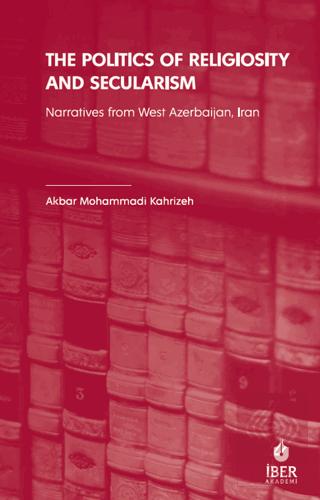
The Politics of Religiosity and Secularism Narratives from West Azerbaijan Iran
Akbar Mohammadi KahrizehİBER
The Politics of Religiosity and Secularism Narratives from West Azerbaijan Iran
Akbar Mohammadi KahrizehIn a world where the boundary between the sacred and the civil is increasingly contested The Politics of Religiosity and Secularism provides a timely and nuanced exploration of the evolving religious landscape in contemporary Iran By focusing on the diverse West Azerbaijan region a crossroads of Shia and Sunni Muslims Turks and Kurds this study moves beyond broad national narratives to capture the lived experiences of ordinary individuals navigating the tension between state imposed religiosity and growing secular movements Through in depth interviews and rigorous discourse analysis the work reveals how modernization generational shifts and the perceived contradictions within religious institutions are fundamentally reshaping Iranian attitudes toward faith and governance Grounded in qualitative research and framed through modern theories like post secularism and post Islamism this book offers a critical bottom up perspective on the secular religious pendulum swinging across the Middle East From the symbolic battleground of the mandatory hijab to the broader push for individual freedoms it examines the legitimacy of secularism as an emerging alternative for a society in transition This study is an essential resource for scholars policymakers and anyone seeking to understand the dynamic struggle for identity and meaning in a society grappling with the demands of modernity It offers more than just an academic analysis it provides a glimpse into the evolving soul of a people looking for an alternative that can respond to the changing needs of the modern world with both reason and respect for their heritage
İBER
In a world where the boundary between the sacred and the civil is increasingly contested The Politics of Religiosity and Secularism provides a timely and nuanced exploration of the evolving religious landscape in contemporary Iran By focusing on the diverse West Azerbaijan region a crossroads of Shia and Sunni Muslims Turks and Kurds this study moves beyond broad national narratives to capture the lived experiences of ordinary individuals navigating the tension between state imposed religiosity and growing secular movements Through in depth interviews and rigorous discourse analysis the work reveals how modernization generational shifts and the perceived contradictions within religious institutions are fundamentally reshaping Iranian attitudes toward faith and governance Grounded in qualitative research and framed through modern theories like post secularism and post Islamism this book offers a critical bottom up perspective on the secular religious pendulum swinging across the Middle East From the symbolic battleground of the mandatory hijab to the broader push for individual freedoms it examines the legitimacy of secularism as an emerging alternative for a society in transition This study is an essential resource for scholars policymakers and anyone seeking to understand the dynamic struggle for identity and meaning in a society grappling with the demands of modernity It offers more than just an academic analysis it provides a glimpse into the evolving soul of a people looking for an alternative that can respond to the changing needs of the modern world with both reason and respect for their heritage
İber Akademi
In a world where the boundary between the sacred and the civil is increasingly contested The Politics of Religiosity and Secularism provides a timely and nuanced exploration of the evolving religious landscape in contemporary Iran By focusing on the diverse West Azerbaijan region a crossroads of Shia and Sunni Muslims Turks and Kurds this study moves beyond broad national narratives to capture the lived experiences of ordinary individuals navigating the tension between state imposed religiosity and growing secular movements Through in depth interviews and rigorous discourse analysis the work reveals how modernization generational shifts and the perceived contradictions within religious institutions are fundamentally reshaping Iranian attitudes toward faith and governance Grounded in qualitative research and framed through modern theories like post secularism and post Islamism this book offers a critical bottom up perspective on the secular religious pendulum swinging across the Middle East From the symbolic battleground of the mandatory hijab to the broader push for individual freedoms it examines the legitimacy of secularism as an emerging alternative for a society in transition This study is an essential resource for scholars policymakers and anyone seeking to understand the dynamic struggle for identity and meaning in a society grappling with the demands of modernity It offers more than just an academic analysis it provides a glimpse into the evolving soul of a people looking for an alternative that can respond to the changing needs of the modern world with both reason and respect for their heritage