The Sidereal Messenger of Galileo Galilei — Galileo Galilei Johannes Kepler
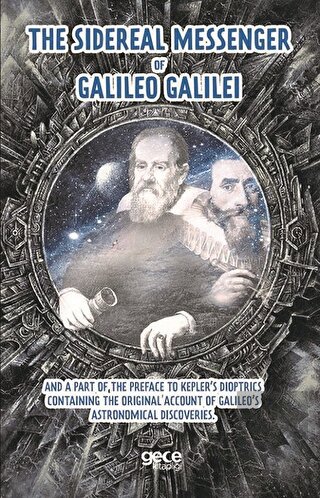
The Sidereal Messenger of Galileo Galilei
Galileo Galilei Johannes KeplerGece Kitaplığı
The Sidereal Messenger of Galileo Galilei
Galileo Galilei Johannes KeplerIn 1609 Galileo then Professor of Mathematics at Padua in the service of the Venetian Republic heard from a correspondent at Paris of the invention of a telescope and set to work to consider how such an instrument could be made The result was his invention of the telescope known by his name and identical in principle with the modern opera glass In a maritime and warlike State the advantages to be expected from such an invention were immediately recognised and Galileo was rewarded with a confirmation of his Professorship for life and a handsome stipend in recognition of his invention and construction of the first telescope seen at Venice In his pamphlet The Sidereal Messenger here translated Galileo relates how he came to learn the value of the telescope for astronomical research and how his observations were rewarded by numerous discoveries in rapid succession and at viii length by that of Jupiter s satellites Galileo at once saw the value of this discovery as bearing upon the establishment of the Copernican system of astronomy which had met with slight acceptance and indeed as yet had hardly any recommendation except that of greater simplicity Kepler had just published at Prague his work on the planet Mars Commentaria de motibus Stellæ Martis on which he had been engaged apparently for eight years there he heard of Galileo s discoveries and at length was invited by Galileo himself through a common friend Giuliano de Medici ambassador of the Grand Duke of Tuscany Cosmo de MediciII to the Emperor RudolphII to correspond with Galileo on the subject of these discoveries The Emperor also requested his opinion and Kepler accordingly examined Galileo sSidereal Messengerin a pamphlet entitledA Discussion with the Sidereal Messenger Florence 1610 In thisDiscussionKepler gives reasons for accepting Galileo s observations although he was not able to verify them from want of a telescope and entirely supports Galileo s views and conclusions adducing his own previous speculations or pointing out as in the case of Galileo s idea of earth light on the moon the previous conception of ix the same explanation of the phenomenon He rejects however Galileo s explanation of the copper colour of the moon in eclipses Kepler ends by expressing unbounded enthusiasm at the discovery of Jupiter s satellites and the argument it furnishes in support of the Copernican theory
Gece Kitaplığı
In 1609 Galileo then Professor of Mathematics at Padua in the service of the Venetian Republic heard from a correspondent at Paris of the invention of a telescope and set to work to consider how such an instrument could be made The result was his invention of the telescope known by his name and identical in principle with the modern opera glass In a maritime and warlike State the advantages to be expected from such an invention were immediately recognised and Galileo was rewarded with a confirmation of his Professorship for life and a handsome stipend in recognition of his invention and construction of the first telescope seen at Venice In his pamphlet The Sidereal Messenger here translated Galileo relates how he came to learn the value of the telescope for astronomical research and how his observations were rewarded by numerous discoveries in rapid succession and at viii length by that of Jupiter s satellites Galileo at once saw the value of this discovery as bearing upon the establishment of the Copernican system of astronomy which had met with slight acceptance and indeed as yet had hardly any recommendation except that of greater simplicity Kepler had just published at Prague his work on the planet Mars Commentaria de motibus Stellæ Martis on which he had been engaged apparently for eight years there he heard of Galileo s discoveries and at length was invited by Galileo himself through a common friend Giuliano de Medici ambassador of the Grand Duke of Tuscany Cosmo de Medici II to the Emperor Rudolph II to correspond with Galileo on the subject of these discoveries The Emperor also requested his opinion and Kepler accordingly examined Galileo s Sidereal Messenger in a pamphlet entitled A Discussion with the Sidereal Messenger Florence 1610 In this Discussion Kepler gives reasons for accepting Galileo s observations although he was not able to verify them from want of a telescope and entirely supports Galileo s views and conclusions adducing his own previous speculations or pointing out as in the case of Galileo s idea of earth light on the moon the previous conception of ix the same explanation of the phenomenon He rejects however Galileo s explanation of the copper colour of the moon in eclipses Kepler ends by expressing unbounded enthusiasm at the discovery of Jupiter s satellites and the argument it furnishes in support of the Copernican theory
Gece Kitaplığı
Galileo Galilei tarafından kaleme alınan The Sidereal Messenger of Galileo Galilei Gece Kitaplığı eseri olarak okurlarla buluşuyor The Sidereal Messenger of Galileo Galilei Galileo Galilei Kitap Özeti In 1609 Galileo then Professor of Mathematics at Padua in the service of the Venetian Republic heard from a correspondent at Paris of the invention of a telescope and set to work to consider how such an instrument could be made The result was his invention of the telescope known by his name and identical in principle with the modern opera glass In a maritime and warlike State the advantages to be expected from such an invention were immediately recognised and Galileo was rewarded with a confirmation of his Professorship for life and a handsome stipend in recognition of his invention and construction of the first telescope seen at Venice In his pamphlet The Sidereal Messenger here translated Galileo relates how he came to learn the value of the telescope for astronomical research and how his observations were rewarded by numerous discoveries in rapid succession and at viii length by that of Jupiter s satellites Galileo at once saw the value of this discovery as bearing upon the establishment of the Copernican system of astronomy which had met with slight acceptance and indeed as yet had hardly any recommendation except that of greater simplicity Kepler had just published at Prague his work on the planet Mars Commentaria de motibus Stellæ Martis on which he had been engaged apparently for eight years there he heard of Galileo s discoveries and at length was invited by Galileo himself through a common friend Giuliano de Medici ambassador of the Grand Duke of Tuscany Cosmo de Medici II to the Emperor Rudolph II to correspond with Galileo on the subject of these discoveries The Emperor also requested his opinion and Kepler accordingly examined Galileo s Sidereal Messenger in a pamphlet entitled A Discussion with the Sidereal Messenger Florence 1610 In this Discussion Kepler gives reasons for accepting Galileo s observations although he was not able to verify them from want of a telescope and entirely supports Galileo s views and conclusions adducing his own previous speculations or pointing out as in the case of Galileo s idea of earth light on the moon the previous conception of ix the same explanation of the phenomenon He rejects however Galileo s explanation of the copper colour of the moon in eclipses Kepler ends by expressing unbounded enthusiasm at the discovery of Jupiter s satellites and the argument it furnishes in support of the Copernican theory Yayınevi Gece Kitaplığı Yazar Galileo Galilei Sayfa 92 Sayfa Kağıt 2 Hamur Boyut 13 50x21 00 cm Basım Yılı Şubat 2018 Barkod 9786052882603 Kategori Yabancı Dilde Kitaplar Doğa Bilimleri
Gece Kitaplığı Yayınları
In 1609 Galileo then Professor of Mathematics at Padua in the service of the Venetian Republic heard from a correspondent at Paris of the invention of a telescope and set to work to consider how such an instrument could be made The result was his invention of the telescope known by his name and identical in principle with the modern opera glass In a maritime and warlike State the advantages to be expected from such an invention were immediately recognised and Galileo was rewarded with a confirmation of his Professorship for life and a handsome stipend in recognition of his invention and construction of the first telescope seen at Venice In his pamphlet The Sidereal Messenger here translated Galileo relates how he came to learn the value of the telescope for astronomical research and how his observations were rewarded by numerous discoveries in rapid succession and at viii length by that of Jupiter s satellites Galileo at once saw the value of this discovery as bearing upon the establishment of the Copernican system of astronomy which had met with slight acceptance and indeed as yet had hardly any recommendation except that of greater simplicity Kepler had just published at Prague his work on the planet Mars Commentaria de motibus Stellæ Martis on which he had been engaged apparently for eight years there he heard of Galileo s discoveries and at length was invited by Galileo himself through a common friend Giuliano de Medici ambassador of the Grand Duke of Tuscany Cosmo de Medici II to the Emperor Rudolph II to correspond with Galileo on the subject of these discoveries The Emperor also requested his opinion and Kepler accordingly examined Galileo s Sidereal Messenger in a pamphlet entitled A Discussion with the Sidereal Messenger Florence 1610 In this Discussion Kepler gives reasons for accepting Galileo s observations although he was not able to verify them from want of a telescope and entirely supports Galileo s views and conclusions adducing his own previous speculations or pointing out as in the case of Galileo s idea of earth light on the moon the previous conception of ix the same explanation of the phenomenon He rejects however Galileo s explanation of the copper colour of the moon in eclipses Kepler ends by expressing unbounded enthusiasm at the discovery of Jupiter s satellites and the argument it furnishes in support of the Copernican theory