The Tragedy of King Richard III — William Shakespeare
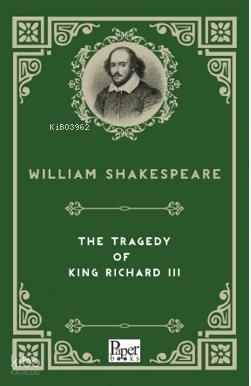
The Tragedy of King Richard III
William ShakespearePaper Books
The Tragedy of King Richard III
William ShakespeareRichard III is a play by William Shakespeare It was probably written c 1592 1594 It is labelled a history in the First Folio and is usually considered one but it is sometimes called a tragedy as in the quarto edition Richard III concludes Shakespeare s first tetralogy also containing Henry VI Part 1 Henry VI Part 2 and Henry VI Part 3 and depicts the Machiavellian rise to power and subsequent short reign of King Richard III of England It is the second longest play in the Shakespearean canon and is the longest of the First Folio whose version of Hamlet otherwise the longest is shorter than its quarto counterpart The play is often abridged for brevity and peripheral characters removed In such cases extra lines are often invented or added from elsewhere to establish the nature of the characters relationships A further reason for abridgment is that Shakespeare assumed his audiences familiarity with his Henry VI plays frequently referring to these plays
Paper Books
Richard III is a play by William Shakespeare It was probably written c 1592 1594 It is labelled a history in the First Folio and is usually considered one but it is sometimes called a tragedy as in the quarto edition Richard III concludes Shakespeare s first tetralogy also containing Henry VI Part 1 Henry VI Part 2 and Henry VI Part 3 and depicts the Machiavellian rise to power and subsequent short reign of King Richard III of England It is the second longest play in the Shakespearean canon and is the longest of the First Folio whose version of Hamlet otherwise the longest is shorter than its quarto counterpart The play is often abridged for brevity and peripheral characters removed In such cases extra lines are often invented or added from elsewhere to establish the nature of the characters relationships A further reason for abridgment is that Shakespeare assumed his audiences familiarity with his Henry VI plays frequently referring to these plays