Urban Hydraulics and Hydrology — Ali Günyaktı
Urban Hydraulics and Hydrology
Ali GünyaktıNobel Akademik Yayıncılık
Urban Hydraulics and Hydrology
Ali GünyaktıThe course of Urban Hydraulics and Hydrology is one of the civil engineering elective courses having essential practical applications in designers life It gives useful theoretical and practical information for the design construction and operation of system s elements for the supply of potable water and for the collection and transfer of municipal wastewater and storm water in urban areas The basic principles of hydraulics and engineering hydrology are summarized firstly Then they are applied to the design of elements of both water supply and sewage systems Supplying of enough freshwater collection and disposal of both municipal sewage water and storm water are the main problems in urban areas People require freshwater supply in enough quantity with a satisfactory quality At the same time it is necessary to collect and dispose properly both the sanitary sewage and the storm water The water supply in the required quantity and quality can be provided by correctly designed constructed and operated certain civil structures These consist of structures used for collection transfer storage treatment and distribution of freshwater For the collection transfer and discharge of both sanitary and storm water engineers design and construct mainly underground structures In the design of all such structures engineers use basic principles of hydraulics and hydrology They basically use the theory of the closed conduits under dynamic pressures for the water supply systems The sewer systems used for the management of both municipal wastewater and storm water are indeed a closed system usually working as an open channel For the design discharge of drainage structures engineers need certain hydrological computation In this book a review of the basic hydraulic and hydrologic principles is given without going into detail Then three parts dealing with the basis of design for the water distribution system the sanitary sewage collection system and storm water drainage system for urban areas are explained Many working examples with some unsolved problems are supplied for better understanding of the theoretical parts given in the book
Nobel Akademik Yayıncılık
The course of Urban Hydraulics and Hydrology is one of the civil engineering elective courses having essential practical applications in designers life It gives useful theoretical and practical information for the design construction and operation of system s elements for the supply of potable water and for the collection and transfer of municipal wastewater and storm water in urban areas The basic principles of hydraulics and engineering hydrology are summarized firstly Then they are applied to the design of elements of both water supply and sewage systems Supplying of enough freshwater collection and disposal of both municipal sewage water and storm water are the main problems in urban areas People require freshwater supply in enough quantity with a satisfactory quality At the same time it is necessary to collect and dispose properly both the sanitary sewage and the storm water The water supply in the required quantity and quality can be provided by correctly designed constructed and operated certain civil structures These consist of structures used for collection transfer storage treatment and distribution of freshwater For the collection transfer and discharge of both sanitary and storm water engineers design and construct mainly underground structures In the design of all such structures engineers use basic principles of hydraulics and hydrology They basically use the theory of the closed conduits under dynamic pressures for the water supply systems The sewer systems used for the management of both municipal wastewater and storm water are indeed a closed system usually working as an open channel For the design discharge of drainage structures engineers need certain hydrological computation In this book a review of the basic hydraulic and hydrologic principles is given without going into detail Then three parts dealing with the basis of design for the water distribution system the sanitary sewage collection system and storm water drainage system for urban areas are explained Many working examples with some unsolved problems are supplied for better understanding of the theoretical parts given in the book
Nobel Akademik Yayıncılık
Urban Hydraulics and Hydrology
Nobel Akademik Yayıncılık
The course of Urban Hydraulics and Hydrology is one of the civil engineering elective courses having essential practical applications in designers life It gives useful theoretical and practical information for the design construction and operation of system s elements for the supply of potable water and for the collection and transfer of municipal wastewater and storm water in urban areas The basic principles of hydraulics and engineering hydrology are summarized firstly Then they are applied to the design of elements of both water supply and sewage systems Supplying of enough freshwater collection and disposal of both municipal sewage water and storm water are the main problems in urban areas People require freshwater supply in enough quantity with a satisfactory quality At the same time it is necessary to collect and dispose properly both the sanitary sewage and the storm water The water supply in the required quantity and quality can be provided by correctly designed constructed and operated certain civil structures These consist of structures used for collection transfer storage treatment and distribution of freshwater For the collection transfer and discharge of both sanitary and storm water engineers design and construct mainly underground structures In the design of all such structures engineers use basic principles of hydraulics and hydrology They basically use the theory of the closed conduits under dynamic pressures for the water supply systems The sewer systems used for the management of both municipal wastewater and storm water are indeed a closed system usually working as an open channel For the design discharge of drainage structures engineers need certain hydrological computation In this book a review of the basic hydraulic and hydrologic principles is given without going into detail Then three parts dealing with the basis of design for the water distribution system the sanitary sewage collection system and storm water drainage system for urban areas are explained Many working examples with some unsolved problems are supplied for better understanding of the theoretical parts given in the book
Nobel Akademik Yayıncılık
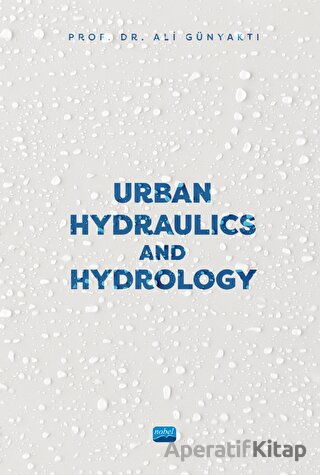
Ali Günyaktı tarafından kaleme alınan Urban Hydraulics and Hydrology Nobel Akademik Yayıncılık eseri olarak okurlarla buluşuyor Urban Hydraulics and Hydrology Ali Günyaktı Kitap Özeti The course of Urban Hydraulics and Hydrology is one of the civil engineering elective courses having essential practical applications in designers life It gives useful theoretical and practical information for the design construction and operation of systems elements for the supply of potable water and for the collection and transfer of municipal wastewater and storm water in urban areas The basic principles of hydraulics and engineering hydrology are summarized firstly Then they are applied to the design of elements of both water supply and sewage systems Supplying of enough freshwater collection and disposal of both municipal sewage water and storm water are the main problems in urban areas People require freshwater supply in enough quantity with a satisfactory quality At the same time it is necessary to collect and dispose properly both the sanitary sewage and the storm water The water supply in the required quantity and quality can be provided by correctly designed constructed and operated certain civil structures These consist of structures used for collection transfer storage treatment and distribution of freshwater For the collection transfer and discharge of both sanitary and storm water engineers design and construct mainly underground structures In the design of all such structures engineers use basic principles of hydraulics and hydrology They basically use the theory of the closed conduits under dynamic pressures for the water supply systems The sewer systems used for the management of both municipal wastewater and storm water are indeed a closed system usually working as an open channel For the design discharge of drainage structures engineers need certain hydrological computation In this book a review of the basic hydraulic and hydrologic principles is given without going into detail Then three parts dealing with the basis of design for the water distribution system the sanitary sewage collection system and storm water drainage system for urban areas are explained Many working examples with some unsolved problems are supplied for better understanding of the theoretical parts given in the book Yayınevi Nobel Akademik Yayıncılık Yazar Ali Günyaktı Sayfa 522 Sayfa Kağıt 1 Hamur Boyut 16 50x24 00 cm Basım Yılı Eylül 2022 Barkod 9786254270635 Kategori Diğer Bilim ve Mühendislik
Nobel Akademik Yayıncılık
The course of Urban Hydraulics and Hydrology is one of the civil engineering elective courses having essential practical applications in designers life It gives useful theoretical and practical information for the design construction and operation of system s elements for the supply of potable water and for the collection and transfer of municipal wastewater and storm water in urban areas The basic principles of hydraulics and engineering hydrology are summarized firstly Then they are applied to the design of elements of both water supply and sewage systems Supplying of enough freshwater collection and disposal of both municipal sewage water and storm water are the main problems in urban areas People require freshwater supply in enough quantity with a satisfactory quality At the same time it is necessary to collect and dispose properly both the sanitary sewage and the storm water The water supply in the required quantity and quality can be provided by correctly designed constructed and operated certain civil structures These consist of structures used for collection transfer storage treatment and distribution of freshwater For the collection transfer and discharge of both sanitary and storm water engineers design and construct mainly underground structures In the design of all such structures engineers use basic principles of hydraulics and hydrology They basically use the theory of the closed conduits under dynamic pressures for the water supply systems The sewer systems used for the management of both municipal wastewater and storm water are indeed a closed system usually working as an open channel For the design discharge of drainage structures engineers need certain hydrological computation In this book a review of the basic hydraulic and hydrologic principles is given without going into detail Then three parts dealing with the basis of design for the water distribution system the sanitary sewage collection system and storm water drainage system for urban areas are explained Many working examples with some unsolved problems are supplied for better understanding of the theoretical parts given in the book